

When we’re online, we know that our every move includes vast amounts of data collection. Australians' internet behaviour is tracked everywhere—from the websites we visit (like Facebook and X) to the content we consume (Netflix and YouTube).
But are Big Tech companies going beyond mere tracking and actually spying on us to gather data? Do Australians think they are being spied on and do they think of certain Big Tech companies as the big perpetrators? The WhistleOut team wanted to know, so we surveyed 1,000 Australians to find out what they think.
Australians Suspect Big Tech Of Spying
Big Tech companies are the big culprit here: a staggering 70.6% of Australians believe Big Tech spies on them.
The suspicions target some of the most ubiquitous platforms that have become an inseparable part of modern life. And honestly, they’re not totally wrong!
Social media networks have been accused of spying and harvesting data from users before. In fact, Cambridge Analytica, a British political consulting firm, harvested data from over 50 million Facebook profiles in 2018. So Australian’s suspicions are not completely unfounded.
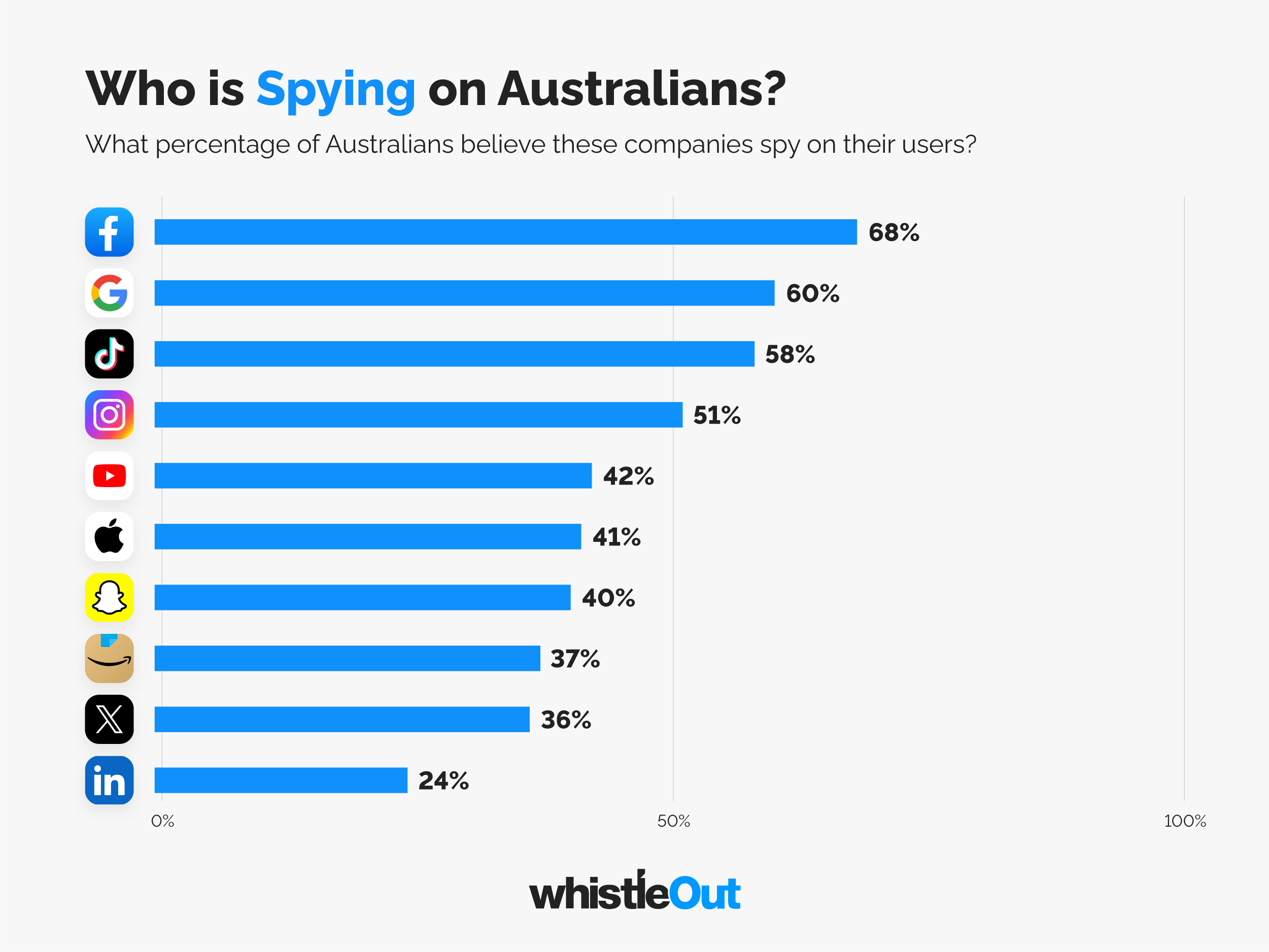
- 68.13% of Australians believe Facebook spies on them
- 60.34% of Australians believe Google spies on them
- 57.65% of Australians believe TikTok spies on them
- 50.57% of Australians believe Instagram spies on them
- 41.93% of Australians believe YouTube spies on them
- 40.93% of Australians believe Apple spies on them
- 39.52% of Australians believe Snapchat spies on them
- 37.25% of Australians believe Amazon spies on them
- 36.40% of Australians believe Twitter spies on them
- 24.08% of Australians believe LinkedIn spies on them
What Drives These Suspicions?
So, why exactly do Australians believe Big Tech is spying on them? Well, there’s a long list of reasons, including the perceived motives around:
- Tailoring content and ads (74.22%)
- Data collection (72.95%)
- Market research (67.85%)

These suspicions aren't entirely unfounded, as 74.49% of Australians have experienced targeted ads based on their online searches appearing on different websites or apps.
- An additional 70.02% have reported seeing ads for products they've merely discussed but never searched for online.
Because Australians see targeted ads in their feeds, 70.8% of Australians believe that Big Tech companies are listening in on them.
- Nearly 52% believe Google is listening to them while 43% believe Apple is listening.
The Australian Response to Threats to Privacy
We were curious to find out how people are reacting to this perceived threat to privacy and what they do to protect their online privacy. In fact, over half of all Australians (56.4%) think it’s important to have control over their data—especially anything collected by Big Tech companies.
So how comfortable are Australians with their data? It turns out that 40.1% of Australians believe they are knowledgeable enough to protect their privacy online to varying degrees.
Data Privacy Worries
Out in the digital realm, some Australians worry about targeted ads. For most folks, these worries don't seem to be a big deal:
- About 36.1% of them feel concerned about ads popping up based on their online activities.
- Only 37.3% of people are uneasy about facial recognition tech used by Big Tech.
Not Everyone Reads the Fine Print
When it comes to privacy policies, only 7.8% of Australians are always up for the task. Most of us just click "I agree" without really knowing what's in there.
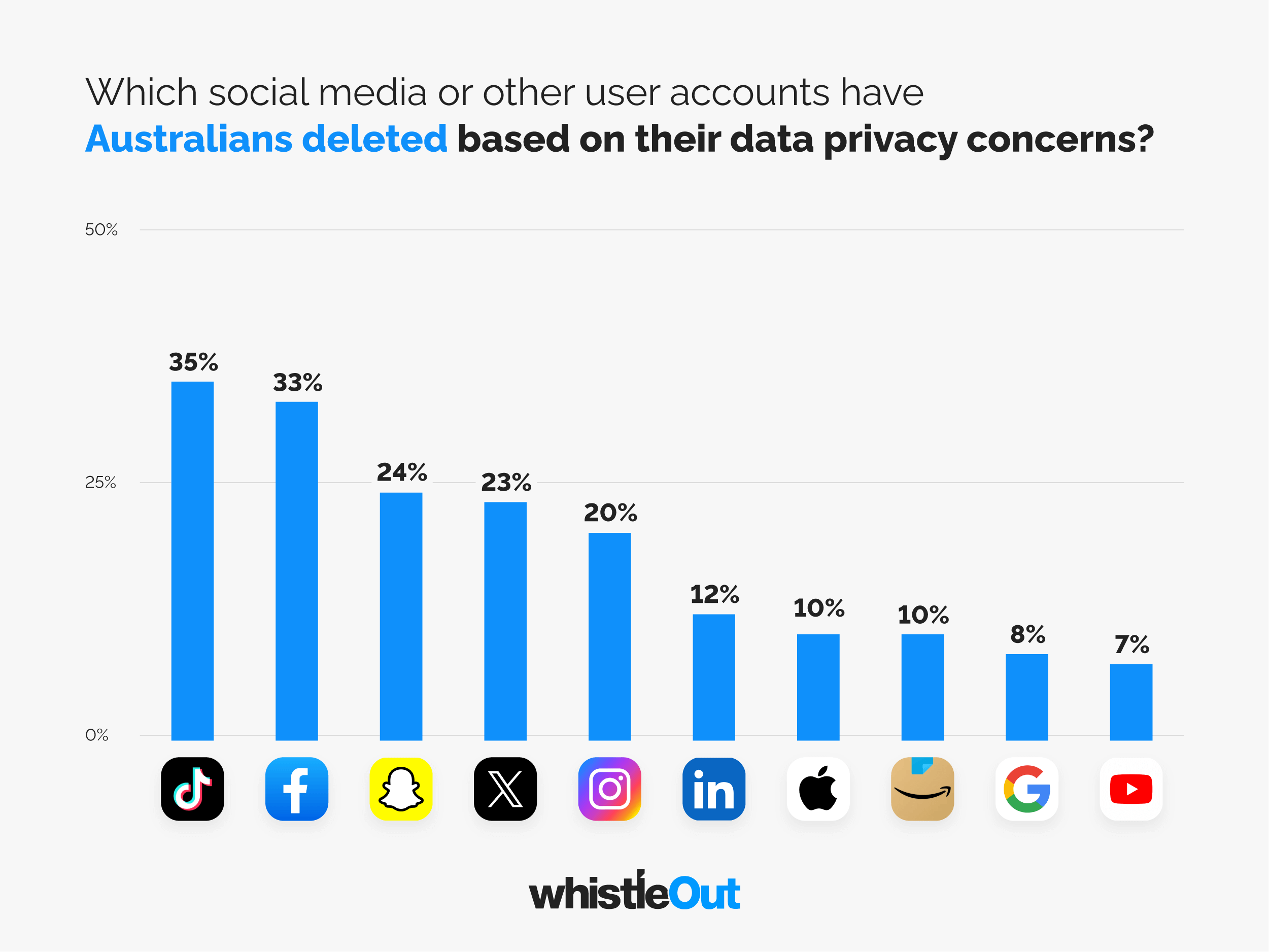
And even though some people have concerns about data privacy, only 38.8% have taken the step of deleting social media accounts.
- TikTok, Facebook, Snapchat, Twitter, and Instagram are among the accounts that got the boot, but for many, it's not something they do.
Finding Privacy in Small Steps
Some Australians are taking steps to protect their privacy online because they want to be in control—the gatekeepers of their privacy.
- Nearly 62% of Australians try to share as little personal info as possible online.
- Another 62% are careful about what permissions they give to apps on their devices.
A smaller percentage of Australians (20.47%) review and adjust their settings regularly, ensuring that the settings they use every day are up to date for their device.
All of these small steps can help Australians take control of their data and privacy online. But what else is needed to make Australians feel more safe and secure?
Australians Want Government Protection Online
Given the prevailing concerns about data privacy and surveillance by Big Tech companies, it’s not surprising that a significant majority of Australians demand stronger government intervention to bolster their sense of security.
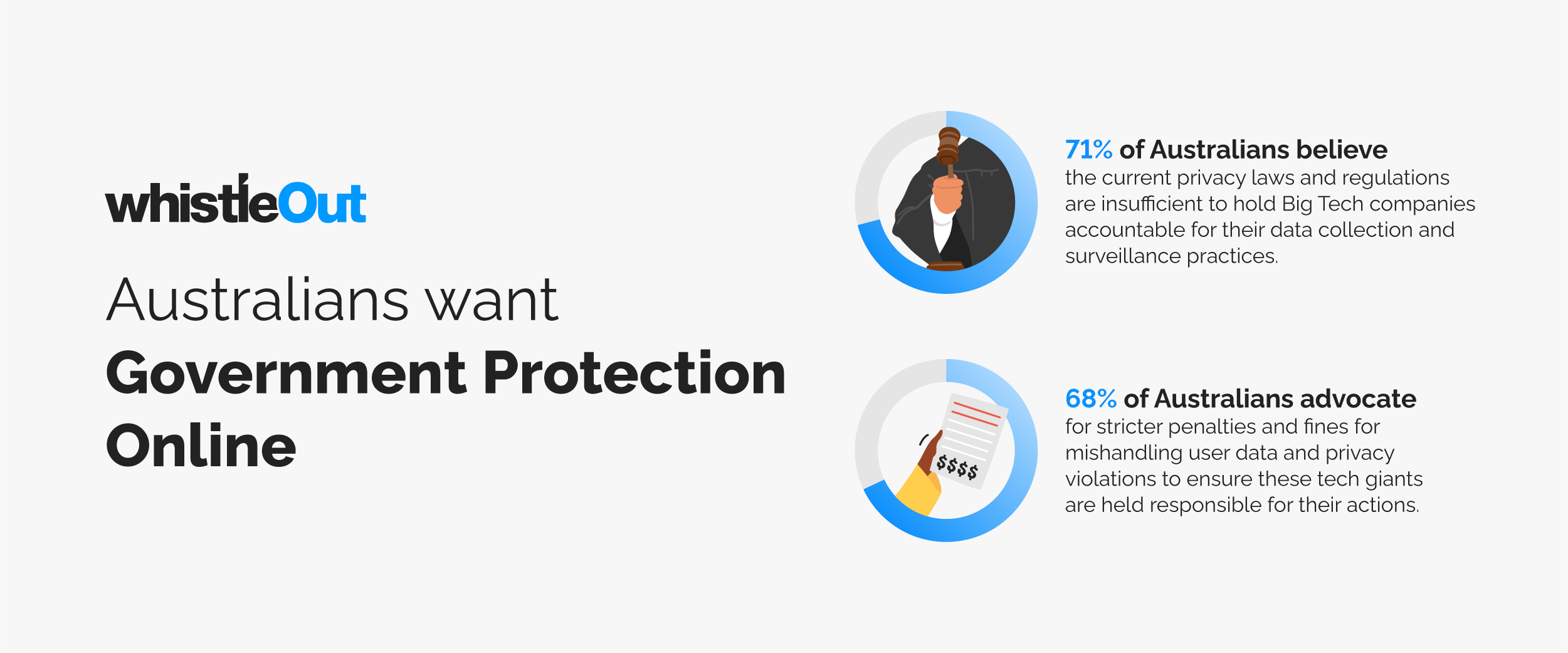
- A majority of Australians (71.2%) believe the current privacy laws and regulations are insufficient to hold Big Tech companies accountable for their data collection and surveillance practices.
- In addition to stronger laws and regulations, 68.3% of Australians advocate for stricter penalties and fines for mishandling user data and privacy violations to ensure these tech giants are held responsible for their actions.
In fact, 86.1% of Australians believe the government should step in and ban Big Tech companies if the companies violate user privacy laws.
But until the government steps in to protect consumers, it’s important for everyday Australians to know how to protect their devices and data online.
Recommendations for Australians to Enhance Online Privacy
Building upon Norton's expert advice featured in TechDay Australia, WhistleOut has recommended steps to enhance the online security of Australians. Here are proactive measures tailored to safeguard your digital footprint:
- Customize Privacy Settings Across Devices: Gain control over your device settings, encompassing advertising identifiers, location tracking, and ad personalization options.
- Activate 'Do Not Track' (DNT): Empower your browsing experience by enabling the 'Do Not Track' feature in your browser settings to request websites not to trace your online activities.
- Decline Cookies When Prompted: When a website seeks permission to track you via cookies, opt to decline or select 'no' to curtail data collection.
- Use an Ad Blocker: Bolster your defences against intrusive ads by installing ad-blocking software or browser plug-ins to deter tracking of your online behaviour.
- Browse in Incognito Mode: Shield your privacy by employing your browser's incognito or private browsing mode to minimize cookie storage and browsing history retention.
Methodology
WhistleOut surveyed 1000 Australian parents and children (16+ years old) about their perspective on children’s mobile plan bills. The survey was distributed online via Pollfish.

Related Articles
![[Editor's Picks] Best mobile plans for October 2026](https://r3.whistleout.com.au/public/images/articles/2026/01/mobile-phone-plan-Featured.png?w=160&h=160&usm=20&usmrad=0.8&fit=crop "[Editor's Picks] Best mobile plans for October 2026")


![[Editor's Picks] Best mobile plans for October 2026](https://r3.whistleout.com.au/public/images/articles/2026/01/mobile-phone-plan-Featured.png?w=280&h=280&usm=20&usmrad=0.8&fit=crop "[Editor's Picks] Best mobile plans for October 2026")


