
- iPhone 17 vs. iPhone 17 Pro: Price
- iPhone 17 vs. iPhone 17 Pro: Camera
- iPhone 17 vs. iPhone 17 Pro: Connectivity
- iPhone 17 vs. iPhone 17 Pro: Design
- iPhone 17 vs. iPhone 17 Pro: Display
- iPhone 17 vs. iPhone 17 Pro: Performance
- iPhone 17 vs. iPhone 17 Pro: Battery
- Should you get the iPhone 17 or iPhone 17 Pro?
The iPhone 17 range family comprises four phones – the iPhone 17, iPhone Air, iPhone 17 Pro and iPhone 17 Pro Max – which gives you plenty of choice if you’re considering a brand new iPhone, whether you’re coming from a previous iPhone generation, or making the switch over from an Android smartphone.
By the way, if you’ve been holding out this long and you’re switching to the iPhone 17 or iPhone 17 Pro from a feature phone, the difference is going to truly blow your mind. Make sure you're sitting down.
Minds suitably blown, you might be slightly overwhelmed by the choices on offer. The honest reality is that there’s truly no one “best” iPhone 17 model that will suit everyone, but we’ll run you through what to consider when making the choice between the iPhone 17 and the iPhone 17 Pro models.
First stop, let’s compare the specifications of the new iPhone 17 models:
| iPhone 17 | iPhone Air | iPhone 17 Pro | iPhone 17 Pro Max | |
|---|---|---|---|---|
| Display | 6.3-inch OLED | 6.5-inch OLED | 6.3-inch OLED | 6.9-inch OLED |
| Resolution | Super Retina XDR | Super Retina XDR | Super Retina XDR | Super Retina XDR |
| Refresh Rate | 120Hz | 120Hz | 120Hz | 120Hz |
| Rear Cameras | 48MP + 48MP | 48MP | 3x 48MP + LiDAR | 3x 48MP + LiDAR |
| Front Camera | 18MP | 18MP | 18MP | 18MP |
| Processor | A19 | A19 Pro (5-core) | A19 Pro (6-core) | A19 Pro (6-core) |
| Storage | 256GB - 512GB | 256GB - 1TB | 256GB - 1TB | 256GB - 2TB |
| Water-Resistance | IP68
|
IP68 | IP68 | IP68 |
| 5G | Sub 6 | Sub 6 | Sub 6 | Sub 6 |
| SIM | Physical + eSIM | eSIM | Physical + eSIM | Physical + eSIM |
| Price | From $1,399 | From $1,799 | From $1,999 | From $2,199 |
iPhone 17 vs. iPhone 17 Pro: Price
Apple doesn’t really make “cheap” phones, but the differences between iPhone models based on not only their capabilities but also on their storage variants can make for some interesting choices to balance up. As has been the case ever since the original model of the iPhone, you can’t expand the storage on any iPhone model, though Apple will quite happily sell you some iCloud storage to make up for any storage woes you might encounter.
Before you ponder iCloud pricing, it’s worth looking over the price points for each model of iPhone 17 and iPhone 17 Pro:
| Phone | RRP | Check price on |
|---|---|---|
| iPhone 17e (256GB) | $1,149 | Amazon |
| iPhone 17e (512GB) | $1,549 | Amazon |
| iPhone 17 (256GB) | $1,549 | Amazon |
| iPhone 17 (512GB) | $1,849 | Amazon |
| iPhone Air (256GB) | $1,899 | Amazon |
| iPhone Air (512GB) | $2,299 | Amazon |
| iPhone Air (1TB) | $3,099 | Amazon |
| iPhone 17 Pro (256GB)* | $1,999 | Amazon |
| iPhone 17 Pro (512GB)* | $2,399 | Amazon |
| iPhone 17 Pro (1TB)* | $2,799 | Amazon |
| iPhone 17 Pro Max (256GB)* | $2,199 | Amazon |
| iPhone 17 Pro Max (512GB)* | $2,599 | Amazon |
| iPhone 17 Pro Max (1TB)* | $2,999 | Amazon |
| iPhone 17 Pro Max (2TB)* | $3,799 | Amazon |
*iPhone 17 Pro and iPhone 17 Pro Max were discontinued in September 2026. While the iPhone 17e, iPhone 17, and iPhone Air got price increases when the iPhone 18 Pro launched, this wasn't the case for the iPhone 17 Pro and iPhone 17 Pro Max. As such, we're still listing their launch pricing here. You should be able to find them cheaper, however.
Here’s how much the lowest cost iPhone 17 and iPhone 17 Pro variants cost on a 36-month term through Vodafone, Telstra and Optus:
iPhone 17 256GB Plans

|
Optus

$60 Optus Choice Plus Plan
$77.86/mth
Min. cost $1,437.96
|
|
Vodafone

$58 Small Plan
$88.02/mth
Min. cost $1,593.72
|
|
Vodafone
$68 Medium Plan
$93.02/mth
Min. cost $1,598.72
|
|
Vodafone
$78 Large Plan
$98.02/mth
Min. cost $1,603.72
|
|
Optus
$69 Optus Promo Plan
$107.86/mth
Min. cost $1,467.96
|
|
Optus
$70 Optus Choice Plus Plan
$108.86/mth
Min. cost $1,468.96
|
|
Telstra

$74 Basic Upfront Mobile Plan
$117.02/mth
Min. cost $1,622.72
Link not supplied
|
|
Telstra
$84 Essential Upfront Mobile Plan
$127.02/mth
Min. cost $1,632.72
Link not supplied
|
|
Optus
$90 Optus Choice Plus Plan
$128.86/mth
Min. cost $1,488.96
|
|
Telstra
$99 Premium Upfront Mobile Plan
$142.02/mth
Min. cost $1,647.72
Link not supplied
|

iPhone 17 Pro 256GB Plans

|
Vodafone
$58 Small Plan
$92.18/mth
Min. cost $2,043.72
|
|
Optus
$60 Optus Choice Plus Plan
$94.52/mth
Min. cost $2,037.72
|
|
Vodafone
$68 Medium Plan
$97.18/mth
Min. cost $2,048.72
|
|
Vodafone
$78 Large Plan
$102.18/mth
Min. cost $2,053.72
|
|
Optus
$69 Optus Promo Plan
$124.52/mth
Min. cost $2,067.72
|
|
Optus
$70 Optus Choice Plus Plan
$125.52/mth
Min. cost $2,068.72
|
|
Telstra
$74 Basic Upfront Mobile Plan
$129.52/mth
Min. cost $2,072.72
Link not supplied
|
|
Telstra
$84 Essential Upfront Mobile Plan
$139.52/mth
Min. cost $2,082.72
Link not supplied
|
|
Optus
$90 Optus Choice Plus Plan
$145.52/mth
Min. cost $2,088.72
|
|
Telstra
$99 Premium Upfront Mobile Plan
$154.52/mth
Min. cost $2,097.72
Link not supplied
|
iPhone 17 Pro Max 256GB Plans
|
Vodafone
$58 Small Plan
$97.74/mth
Min. cost $2,243.88
|
|
Optus
$60 Optus Choice Plus Plan
$100.08/mth
Min. cost $2,237.88
|
|
Vodafone
$68 Medium Plan
$102.74/mth
Min. cost $2,248.88
|
|
Vodafone
$78 Large Plan
$107.74/mth
Min. cost $2,253.88
|
|
Optus
$69 Optus Promo Plan
$130.08/mth
Min. cost $2,267.88
|
|
Optus
$70 Optus Choice Plus Plan
$131.08/mth
Min. cost $2,268.88
|
|
Telstra
$74 Basic Upfront Mobile Plan
$135.08/mth
Min. cost $2,272.88
Link not supplied
|
|
Telstra
$84 Essential Upfront Mobile Plan
$145.08/mth
Min. cost $2,282.88
Link not supplied
|
|
Optus
$90 Optus Choice Plus Plan
$151.08/mth
Min. cost $2,288.88
|
|
Telstra
$99 Premium Upfront Mobile Plan
$160.08/mth
Min. cost $2,297.88
Link not supplied
|
iPhone 17 vs. iPhone 17: Camera

The biggest differentiator between Apple’s regular and Pro line smartphones has long been in the camera capabilities offered in each. Apple’s position is generally that the regular iPhone models are for everyday folks who just want simpler but generally good pictures, while their Pro lines are, as the suffix suggests, for professional photographers – or possibly just folks who would like to imagine that they could be professional photographers.
What does that mean in terms of what you get with each phone model? If we’re talking the iPhone 17, you get a dual 48MP pair of wide and ultra-wide sensors, along with an 18MP front-facing camera.
Switching up to the more expensive iPhone 17 Pro or iPhone 17 Pro Max gets you a considerable bump up in specifications, not just relative to the iPhone 17 but also relative to prior iPhone Pro models. The trio of lenses at the rear comprise a 48MP wide, 48MP ultra-wide and 48MP 8x telephoto sensor, while the front of the phone shares the same 18MP front-facing selfie camera.
The 18MP selfie camera on either the iPhone 17 or iPhone 17 Pro and iPhone 17 Pro Max allows for landscape selfies without needing to actually flip your iPhone around, a neat little technology trick. Beyond that, however, the best photography features really do sit on the Pro side of the fence, especially if you want or need features such as long telephoto or ProRes RAW video.
iPhone 17 camera samples
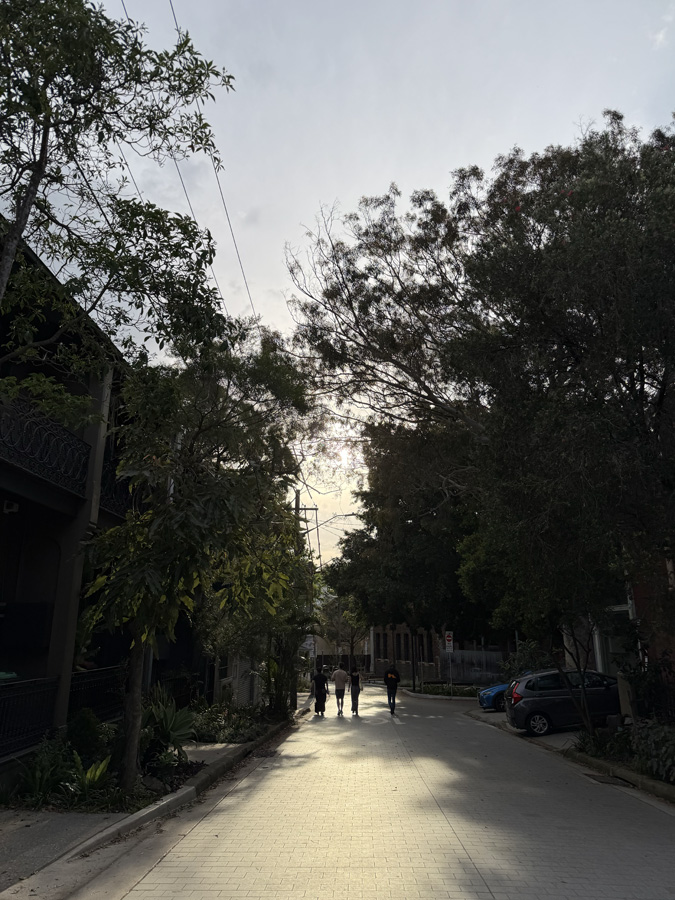
Check out these camera samples taken on the iPhone 17. Click or tap on any photo to see a larger version.













iPhone 17 Pro camera samples
Check out these camera samples taken on the iPhone 17 Pro and iPhone 17 Pro Max. Click or tap on any photo to see a larger version.








iPhone 17 vs. iPhone 17 Pro: Connectivity
In terms of cables and connections, there’s no difference between the iPhone 17, iPhone 17 Pro and iPhone 17 Pro Max, with all three utilising the USB-C standard for connectivity. Apple will include a USB-C cable – and typical Apple style, it’s likely to be the same nice braided model found in the iPhone 16 family – in the box with either phone, but no actual charger.
In terms of mobile network connectivity, both the iPhone 17 and iPhone 17 Pro devices support 5G – something would be pretty awry in Apple’s world if phones at this price didn’t – but for Australian models, they’ll still sadly only support Sub 6Ghz 5G, even though international models in some markets also offer faster mmWave connectivity. Australian models also continue to support a single physical Nano SIM plus eSIM, though some international models are eSIM only.
Both the iPhone 17 and iPhone 17 Pro/Max handsets support WiFi 7 if you’ve got a WiFi 7-capable router setup.
iPhone 17 vs. iPhone 17 Pro: Design
Historically, Apple’s Pro series phones have tended to have more “serious” designs and colours whereas the regular iPhone lineups have veered more towards a fun, consumer-centric colour focus.
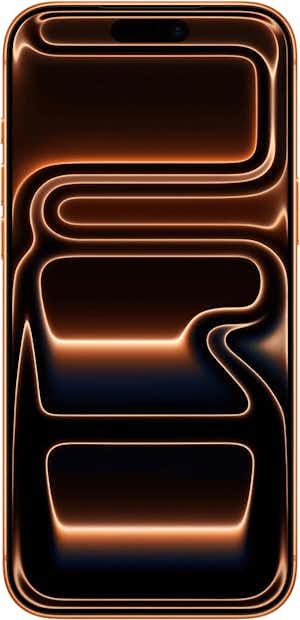
That’s not quite the story for the iPhone 17 and iPhone 17 Pro. The iPhone 17 comes in Black, White, Mist Blue, Sage and Lavender finishes, giving you a lot of hue choices to make, while the iPhone 17 Pro and iPhone 17 Pro Max ship in Silver, Cosmic Orange and Deep Blue. Fewer choices, but it’s interesting to note that there’s no black or even near-black finish for the Pro lines, and the Cosmic Orange is very bright and the kind of colour that we’d typically have expected more for a non-Pro phone. If you want a Pro phone to stand out amongst the crowd, that Cosmic Orange finish is going to be the one you’re going to want to opt for.
Apple does sell its own range of phone cases, and it’s not like there won’t be a slew of phone cases and colour choices open to you if nothing in the iPhone 17 or iPhone 17 Pro lineups appeals to you, though quite how quickly the third-party options that fit properly will be available remains to be seen. Be wary in the meantime of any case that promises compatibility with “NEW” iPhones or “2025” iPhones, as they’re likely to have been produced based on leaks and rumours, and might not be quite finely tuned to the size and layout of the new devices.
Physically, the iPhone 17 and iPhone 17 Pro are fairly similarly sized units in most respects, though the iPhone 17 Pro is thicker and markedly heavier, but that’s dwarfed by their much bigger brother, the iPhone 17 Pro Max. It’s Apple’s heaviest iPhone this year, and not by a small margin.

Dodo's NBN 500 Unlimited plan is our pick for the best NBN 500 plan for September.
|
Dodo

FTTP, HFC
Editor's Pick
nbn500 Unlimited Plan
$62.99/mth
Min. cost $62.99
|
iPhone 17 vs. iPhone 17 Pro: Display
The iPhone 17 and iPhone 17 Pro both share the same size OLED screen at 6.3 inches with a resolution of 2622x1206, while the iPhone 17 Pro Max punches it up to 6.9 inches at a resolution of 2868x1320.
In prior years, the big display difference between a Pro model iPhone and its regular sibling would have been in screen refresh rates, with older standard iPhones stuck at 60Hz while Pro models got fancier 120Hz capable “ProMotion” displays.
Apple has honestly been tracking very slowly against its Android competition in this respect, with even super budget Android phones offering 120Hz, so for this year, it’s brought ProMotion to every iPhone 17 model (and the iPhone Air) for smoother scrolling on web pages and in any kind of fast action content such as games.
It’s great to see at the regular iPhone level given their pricing, and on this score, it’s pretty much a tie, and just a question of what size iPhone display you favour – small and more pocketable, or larger with more screen real estate for your phone usage?
iPhone 17 vs. iPhone 17 Pro: Performance
Apple upgrades the processors behind the displays of its iPhones each year, but not all iPhones are created the same, and that’s most apparent at the performance level.
The Apple iPhone 17 runs on Apple’s A19 processor with a six-core CPU and a five-core GPU, while the Pro phones get an A19 Pro with a six-core CPU and a six-core GPU. The expectation here is that the Pro phones should be a touch faster and more capable than the regular iPhone models, whether that’s for the purposes of improved camera functionality or working with Apple Intelligence features. The Pro models also benefit from more underlying RAM in each model, though this isn’t a specification that Apple actually makes public.
Storage on the iPhone 17 lineup starts at 256GB across the lineup, but for the iPhone 17 your only other choice is a 512GB model, where the iPhone 17 Pro also has a 1TB option and the iPhone 17 Pro Max can shift up to either 1TB or 2TB – though as you might expect, that 2TB model isn’t inexpensive!
Apple’s claims around the performance of the A19 and A19 Pro are, of course, that they’re superb performers, but then they would say that – they want to sell you phones, after all.
iPhone 17 vs. iPhone 17 Pro: Battery
Apple never officially releases direct figures for their iPhone range, preferring instead to talk around typical usage scenarios.
For the iPhone 17, this is expressed as battery life of up to 30 hours of video playback. For the purposes of comparison, the iPhone 16 that it’s effectively replacing is claimed to be good for up to 22 hours of video playback.
Switching up to the iPhone 17 Pro, and we’re talking 31 hours of video playback; again, the comparison there with the prior model is for up to 25 hours on the iPhone 16 Pro it’s replacing in Apple’s lineup. Finally, for the iPhone 17 Pro Max, the claim there is for up to an impressive 37 hours of video playback. Comparatively, the iPhone 16 Pro Max promised up to 33 hours of video playback.
In our real-world testing, we found that the standard iPhone 17 and iPhone 17 Pro were both able to get up to seven hours of screen time per charge. That should equate to a full day of moderate usage with a comfortable buffer. The iPhone 17 Pro Max can easily get nine hours of screen time per charge, which could get you through two days before you need a top up.
Should you get the iPhone 17 or iPhone 17 Pro?
Apple does not sell inexpensive phones, and as such, any iPhone buy is a serious investment.
The iPhone 17’s pricing is broadly in line with prior models, though it is nice to note that the baseline model now ships with 256GB of storage. That’s also true for the Pro models, but there the appeal is most prominently around photographic features. If you crave the best in iPhone photography, there’s little doubt that you should opt for a Pro model phone. The bounce up in battery life across the range is also nice, but it’s most pronounced for those Pro models and especially the Pro Max line, at least based on Apple’s claims.
On the other hand, if you’re after an iPhone upgrade and you don’t need those kinds of pro photography features, the iPhone 17 should be entirely sufficient for all of your everyday app needs right now and through its effective service life. It’s not quite as high-end as the iPhone 17 Pro or iPhone 17 Pro Max, but it’s also considerably less expensive.
If you haven't decided yet, read our review of the iPhone 17 here and our review of the iPhone 17 Pro and iPhone 17 Pro Max here.
iPhone 17 256GB Plans
|
Optus
$60 Optus Choice Plus Plan
$77.86/mth
Min. cost $1,437.96
|
|
Vodafone
$58 Small Plan
$88.02/mth
Min. cost $1,593.72
|
|
Telstra
$74 Basic Upfront Mobile Plan
$117.02/mth
Min. cost $1,622.72
Link not supplied
|
iPhone 17 Pro 256GB Plans
|
Vodafone
$58 Small Plan
$92.18/mth
Min. cost $2,043.72
|
|
Optus
$60 Optus Choice Plus Plan
$94.52/mth
Min. cost $2,037.72
|
|
Telstra
$74 Basic Upfront Mobile Plan
$129.52/mth
Min. cost $2,072.72
Link not supplied
|
iPhone 17 Pro Max 256GB Plans
|
Vodafone
$58 Small Plan
$97.74/mth
Min. cost $2,243.88
|
|
Optus
$60 Optus Choice Plus Plan
$100.08/mth
Min. cost $2,237.88
|
|
Telstra
$74 Basic Upfront Mobile Plan
$135.08/mth
Min. cost $2,272.88
Link not supplied
|
iPhone Air 256GB Plans

|
Optus
$60 Optus Choice Plus Plan
$75.06/mth
Min. cost $1,337.16
Out of stock
|
|
Vodafone
$58 Small Plan
$97.75/mth
Min. cost $1,944
|
|
Telstra
$74 Basic Upfront Mobile Plan
$126.75/mth
Min. cost $1,973
Link not supplied
|
Alex Kidman
Freelance Contributor

Related Articles


