

 Prefer WhistleOut in Google
New standards introduced by the Australian Communications and Media Authority (ACMA) today have seen Telstra's coverage area reduced by millions of kilometres as the regulator defines a universal definition of usable service.
From today, telcos must classify coverage as either good, moderate or basic. Areas where signal strengths are below -115dBM are also now declared as not having usable services and can't be shown on coverage maps.
Importantly, ACMA itself has previously noted that these "no coverage" areas may still have some connectivity, but the service is expected to be "limited, inconsistent or non-existent".
Historical network data shows around 1.5 million Telstra customers each month have used the network in these areas and around 57,000 emergency calls have been successfully made within a single year.
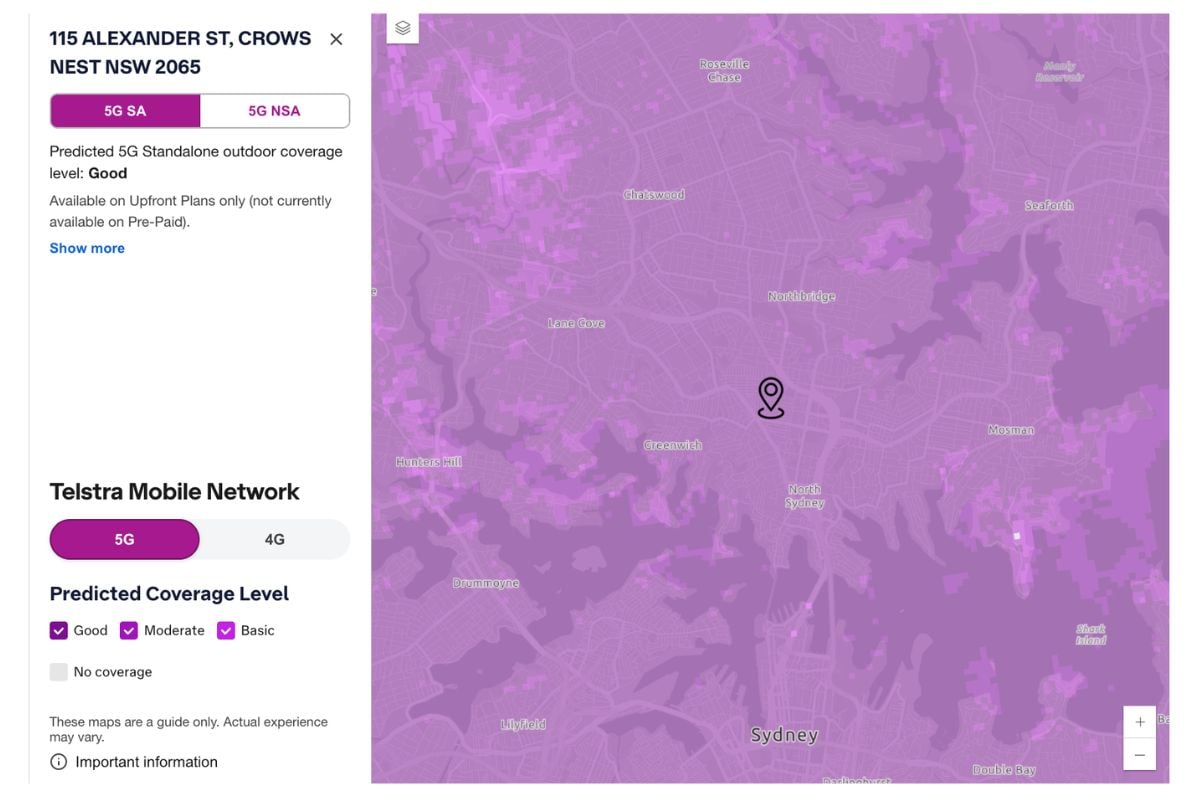
This change doesn't affect the immediate geographic footprint of any of the networks but rather the ways in which they're discussed. Typically, this is as a percentage of Australians covered.
Optus has welcomed the industry-wide standards. A spokesperson said, "This is an important step in improving transparency and giving customers greater confidence when comparing services across providers".
"Our updated coverage map reflects these new standards and provides customers with a clearer, more detailed view of the experience they can expect, helping them make more informed decisions."
Under the new standard and advanced modelling it requires Optus says its 4G network population coverage has increased from around 98.5% to 99.11%. Its 5G network now covers 94.5% of the population, up from 91.86%.
Vodafone similarly called the changes a huge win for consumers.
"For the first time, customers can look at a coverage map and trust it reflects where their phone will actually work in everyday conditions," said a Vodafone spokesperson.
"That transparency will drive stronger competition, helping customers get better value and making it easier to compare providers and avoid paying a premium for coverage that doesn’t deliver.”
Vodafone says its 4G population coverage has increased from 98.5% to 99% and its 5G footprint has increased from 91.3% to 94.5%. Optus and Vodafone's network coverage is similar in scope thanks to a network-sharing agreement introduced last year.
Telstra says it ultimately disagrees with the approach the ACMA has taken but still backs its network as Australia's largest.
"The map might look different, but our network and coverage haven't changed," said a Telstra spokesperson.
"Telstra's network still offers the same strength and reach, backed by at least 2,000 more mobile sites than any other provider. The new maps will still show what our customers already know and why more regional Australians choose us: Telstra's coverage footprint is vastly larger than any other mobile network."
"Under the new standard, our predicted coverage footprint is over 2.14 million square kilometres. By their own numbers, our competitor's networks cover 1.2 million square kilometres – Telstra's network is more than 900,000 square kilometres larger than any other MNO network under the new standard. That's an area greater than the total size of NSW."
While it has previously used population coverage figures such as 99.7% of Australians for its 4G network and 95% for its 5G coverage, the telco has not provided updated figures.
Communications Minister Anika Wells said these changes will make it easier for consumers to compare coverage.
“Our priority is keeping all Australians safe and informed," said Wells. "These standards will improve transparency about coverage and empower choice.”
Dylan Crismale
Digital Content Editor

Related Articles


