

OPPO Reno 5G Review: The Verdict
Thanks to a versatile camera setup, a swanky notchless design, good battery life, and the added bonus of 5G, the Reno 5G is definitive proof that OPPO can make a top-tier smartphone.
What we love
- Slick notchless design
- Excellent primary camera
- Solid battery life
What could be improved
- No wireless charging or water-resistance
- Zoom lens can be inconsistent
- 5G coverage isn't widely available yet
The essentials
- Performance: Super snappy. No complaints.
- Battery: About a day-and-half per charge.
- Screen: Mostly stunning, but 1080p is a comparatively low resolution for a 6.6-inch screen. However, this tends to not to be overly noticeable when using the phone.
- Camera: Excellent primary camera supported by a solid wide-angle and 5x telephoto zoom lens. While the zoom lens can be inconsistent, it's still possible to use it to get great snaps not possible on any other phone.
85/100
It's never surprising when a smartphone manufacturer's latest handset is its best; anything else would be a disappointment. Naturally, the Reno 5G is OPPO's best device to date, but that's just the start. The Reno 5G marks OPPO's transition from "affordable premium" to pure premium. It's a first for the company - a flagship smartphone that can genuinely command a top-tier asking price.
Retailing for $1,499 outright, the Reno 5G is OPPO's priciest mainline handset to date. It's still cheaper than the other 5G handsets on the market, but this isn't a device you buy because it's a little bit more affordable. It's a device you buy because it's great in its own right.
What you should know before buying a 5G smartphone
5G is new and exciting technology, and it will keep getting better. But as with any new technology, there are a few things you should keep in mind if you're an early adopter.
- 5G coverage is scarce at the moment. Telstra is currently the only telco with a publicly available 5G network, and it only covers parts of 10 cities. This will continuously grow, but at present, your 5G smartphone will be spending a lot of time on 4G networks. Read more about Telstra's 5G coverage here.
- 5G speeds aren't quite there yet. While telcos are promising speeds as high as 2Gbps, in real world testing we've found 5G speeds on Telstra's network have typically ranged from 100Mbps to 350Mbps when testing in Sydney. These speeds are nothing to scoff at, but are also readily obtainable on Telstra's 4G network.
- Consistent 5G access seems to use more of a phone's battery. While limited 5G coverage makes this hard to quantify in terms of daily usage, constant access to a 5G network caused our test devices to burn through battery at a faster rate than when connected to a 4G network.
- 5G can be a little bit temperamental. Test devices have at times struggled to maintain a connection and flicked back and forth between 4G and 5G in areas with otherwise good 5G coverage. This could be a factor that further increased battery drain, given it requires the modem to work harder.
None of this is to say that 5G is bad, it's just worth remembering that it's a new technology and very much still in development.

Let's talk about cameras
- 6.6-inch 1080p+ display
- Snapdragon 855 processor
- 256GB storage, 8GB RAM
- 48MP + 8MP + 13MP rear-facing cameras
- 4,065mAh battery
The Reno 5G is all about cameras: both on the front and on the back.
The front-facing camera isn't notable because of quality - it does a good enough job taking a selfie - but because of where it's hidden. Rather than using a notch or a camera cut-out, OPPO has hidden the Reno 5G's 16MP selfie camera inside a fin that slides up whenever you want to snap a pic. It's a cute design, and means the rest of the phone is genuinely all screen.
There's no facial recognition on the Reno 5G, so you'll only ever see the shark fin pop up if you're taking a selfie, if you're taking a photo with flash, or using the flashlight feature. I'm not big on selfies, so I almost never see the shark fin surface from the depths. The camera does however have in built drop protection; if it even detects a slight drop, the Reno will retract the shark fin to protect the phone.
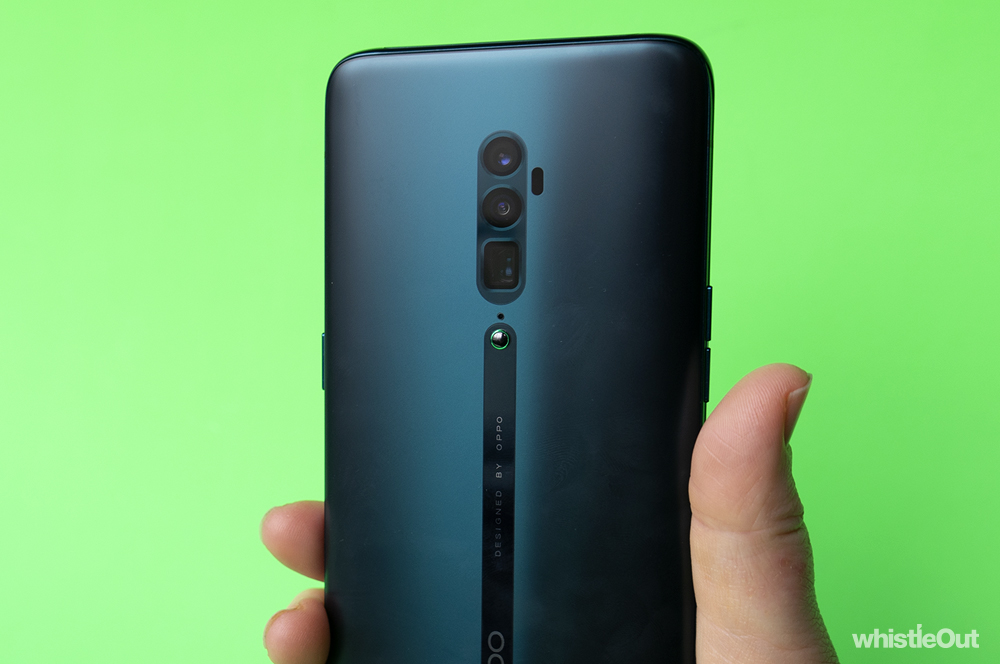
On the back of the Reno 5G, you'll find three rear-facing cameras. The setup includes the following:
- A 48MP primary lens, with an aperture of f/1.7 (equivalent to 26mm or 1x zoom)
- An 8MP ultra-wide angle lens with an aperture of f/2.2 (equivalent to 16mm or 0.6x zoom)
- A 13MP telephoto lens with an aperture of f/3 (equivalent to 130mm to 5x zoom)
Using these cameras and some software trickery, the Reno 5G is able to achieve up to 10x hybrid zoom. There's also a purely digital 60x zoom, but it's almost impossible to use. You need tripods for hands to keep it stable enough to frame up a shot, and even then, there's a good chance your photo will just be a blurry mess. It feels like this was added purely to one-up the Huawei P30 Pro's 50x digital zoom in a classic case of spec-war-pissing-contest.
The Reno 5G's primary camera is better than ever when it comes to low-light. It's not quite as good as the Huawei P30 Pro or Pixel 3, but it's not far behind. The camera shoots quickly, which makes it a lot easier to capture great shots in low-light environments, even when movement is involved. That's pretty handy if you like taking photos of metal bands. Not every shot will turn out (which is an adage that be applied to almost any phone), but the Reno 5G is more reliable than past OPPO devices.

If you're shooting stiller subjects at night, the Reno 5G also has a dedicated night photography mode. Night modes take multiple images over a longer period of time to stitch them together into a brighter image, although the Reno 5G can occasionally over-expose these images just a tad. This photo was taken without night mode:

And this photo was taken with night mode on:

However, the telephoto zoom lens is arguably the Reno 5G's most important camera feature. Much like Huawei, OPPO has used a periscope design to fit a longer lens into the phone's body without adding too much thickness - it's been rotated by 90 degrees, and a prism reflects light into it.
When actually using the Reno 5G camera app, you'll get four suggested zoom factors: 1x, 2x, 6x, 10x. The below image compares the four:
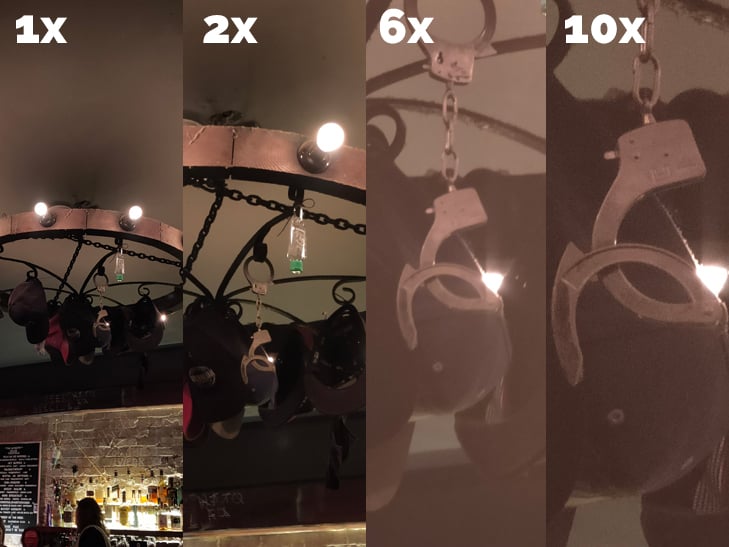
1x is the standard primary lens and 2x is a digital zoom. It gets a little tricky after.
The Reno 5G's telephoto lens has an equivalent focal length of 130mm, which makes it a 5x lens. Instead of using the lens' optical focal length, the Reno 5G punches into 160mm using software technology; this makes it equivalent to having 10 factors of zoom between the wide angle lens and the telephoto lens. You can access standard 5x zoom via pinch to zoom. 10x zoom is also software assisted.
Shots at 6x can look pretty good. You'll need steady hands, but you can get great results in good lighting.

Shots at 10x zoom lose a bit of detail, and once again, tend to work best in well lit environments. 10x zoom isn't quite as reliable as what Huawei achieved with the P30 Pro, but it's still a welcome addition that makes the Reno 5G much more versatile than the typical smartphone camera. It's a huge improvement over digital zoom, and you can always use a tripod to further improve your photos.

As useful as zoom is, getting the most out of it can be tricky - especially the further you zoom. Even a tiny shake of your hand is magnified significantly when you're zoomed; the slightest movements can entirely change the composition of your shot. This can make taking a zoomed photo of a moving subject especially tricky, as I found when I saw Karnivool. A dark room and singer who wouldn't stand still meant I just didn't have any luck taking a sharp photo with the Reno 5G's zoom lens.

The Reno 5G's third lens is used for zooming out: it's an ultra-wide angle lens that lets you fit more into the shot. You might notice a little fisheye on the edge of photos, but it isn't overly pronounced. Here's an image from the wide-angle lens:

And here's the same scene shot on the standard lens:

While I find myself using zoom more than the ultra-wide, it's a nice addition nonetheless and makes the Reno 5G a great all-round shooter.
Polished off
Camera aside, the Reno 5G is one hell of a polished smartphone. From performance to look and feel, the Reno 5G is a winner. The in-screen fingerprint reader is speedy and reliable, performance is super snappy, and the device itself is stunning. I don't mind notches or camera cut-outs, but the Reno 5G's all-screen display is wonderful. I can't overstate how much I love having a giant unobstructed screen. While the pop-up camera can be seen as a sort of compromise - especially given the lack of water-resistance - it means the Reno 5G is easily one of the most elegant smartphones around.
The Reno 5G is also one of the heaviest smartphones around, weighing in at 215g. That makes it 8g heavier than the already chonky iPhone XS Max, and that's before you put a case on it. (There's one in the box that accounts for the pop-up camera.) It's not like the Reno 5G is too heavy, but it's hard not to notice its weight.
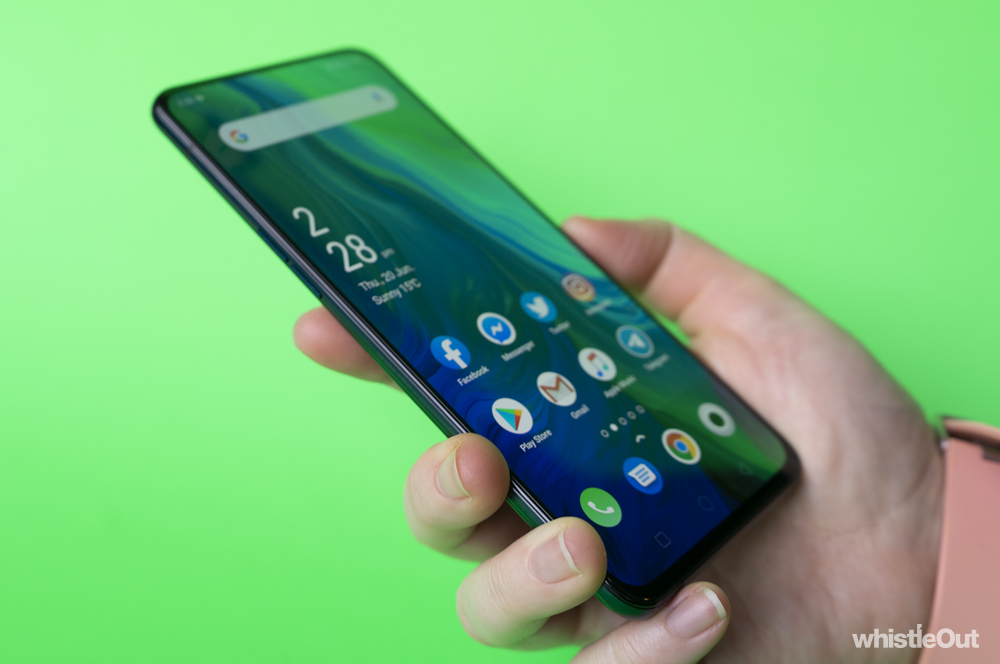
In terms of software, the Reno 5G runs OPPO's cleanest operating system yet. OPPO is renowned for its heavily customised takes on Android (dubbed ColorOS), but the latest version is more Android-like than ever. It has an app drawer out of the box. It doesn't have a hissy fit if you try and change default apps for messaging et al. There's a few Apple-inspired icons in the notification centre, but there's nothing here that will stop any Android veteran feeling right at home.
You might find you get delayed notifications due to aggressive battery management, but you can get around this by "locking" an app (swipe down on it in the multitasking menu). It's easy enough, but it's not immediately obvious to anyone who hasn't used an OPPO phone before.
There are a few small omissions worth calling out. The Reno 5G doesn't have a headphone jack (which is par the course for flagships these days), but it's also missing wireless charging and water-resistance (presumably due to the pop-up camera). And while it features fast charging (it can go from flat to 50% in about half an hour), the Reno 5G doesn't have OPPO's fastest fast charging tech. Last year's R17 Pro could go from 10% to 85% in about 20 minutes. But as nice as fast charging is, you should still be able to get about a day-and-a-half from the Reno 5G in between charges, or a full day with a comfortable buffer.

Who is the OPPO Reno 5G for?
There's not much to dislike about the OPPO Reno 5G. It has a unique design, great cameras, runs fast, and is packed full of the latest tech. Wireless charging and water-resistance would have been nice to have, but otherwise, the Reno 5G delivers on all fronts.
At this stage 5G alone isn't really a reason to buy a new device, but the OPPO Reno 5G is the best value 5G smartphone on the market if you love to live on the bleeding edge. And it's still a great device on 4G networks, although it's also worth considering the 4G-only Reno 10x Zoom to save money if 5G isn't a must-have.
But either way, the Reno 5G feels like an important milestone for OPPO. It's a phone that proves that OPPO can make more than just "affordable premium". It's a phone that proves OPPO can make a great smartphone genuinely worth a four-figure price-tag.
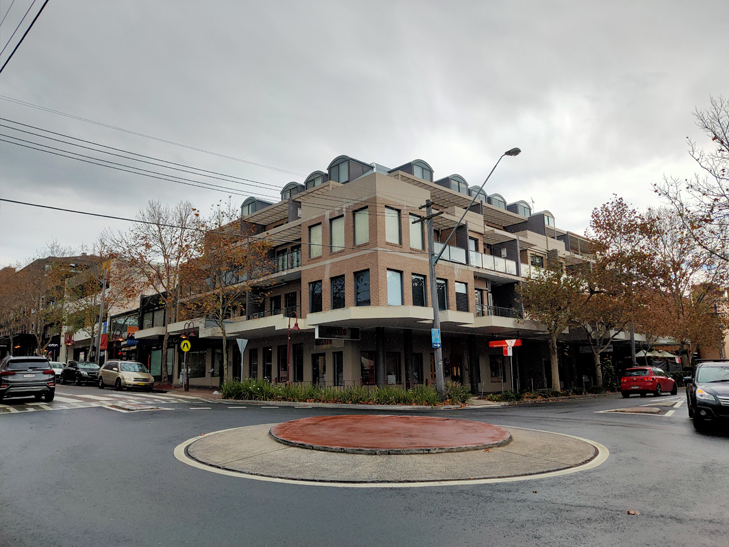
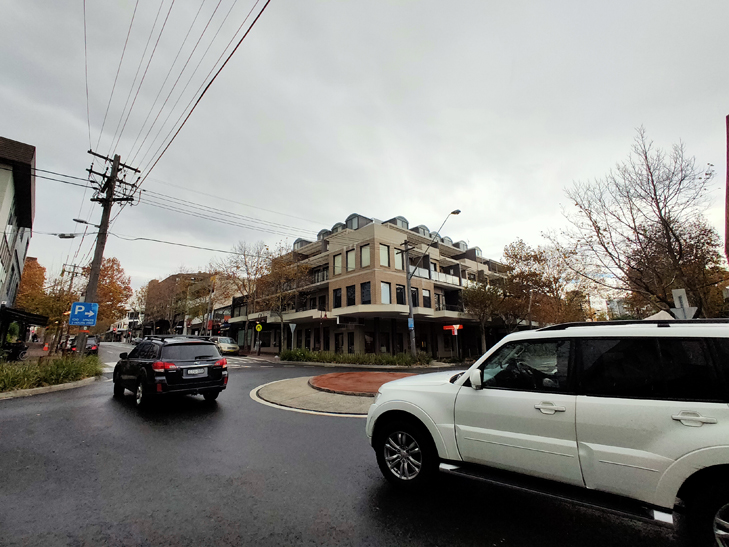
Even more OPPO Reno 5G camera samples


















I don't want the OPPO Reno 5G, what else can I buy?
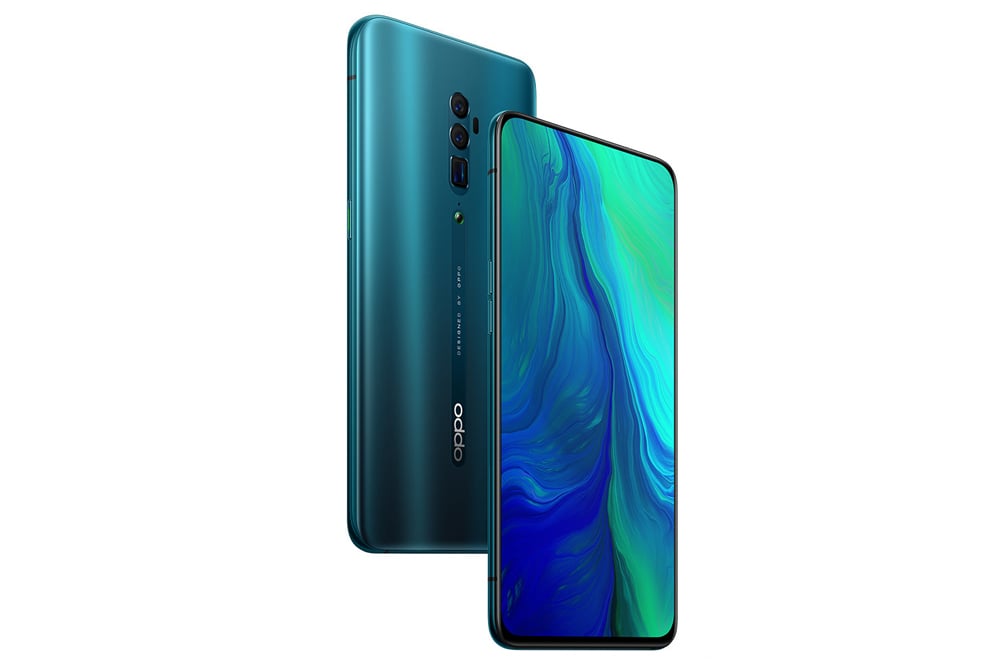
OPPO Reno 10x Zoom
If you're not at all enticed by 5G right now - which is fair - you might want to opt for the cheaper OPPO Reno 10x Zoom instead. It's almost identical to the Reno 5G, it just doesn't have 5G connectivity. Sacrificing 5G means you'll pay $300 less. Of course, while Telstra is ranging the Reno 5G on a plan, it's not ranging the 4G Reno 10x Zoom. However, you can find the Reno 10x Zoom on Woolworths Mobile plans if you'd prefer to avoid buying outright.

Huawei P30 Pro
If the triple-camera setup is the main reason you're looking at the OPPO Reno 5G, the P30 Pro is a great 4G alternative. It has the best camera on any smartphone you can buy right now: it has stronger low-light performance and produces more reliable results with its telephoto lens.
But as good as the P30 Pro camera is, you may want to think twice before buying a P30 Pro right this very moment. Huawei is currently involved in a dispute with the US government, which effectively cuts it off from Android. The P30 Pro will still be able to run Google apps and services, but may receive security updates at a slower pace. If the ban isn't resolved, Huawei smartphones are unlikely to see a major Android operating system update. Recent statements made by the US government suggest that the outcome for Huawei could be positive, however.
If you do buy a P30 Pro, you won't lose any out-of-the-box functionality, but there are almost no specifics around exactly how the Android ban will affect the phone going forward.
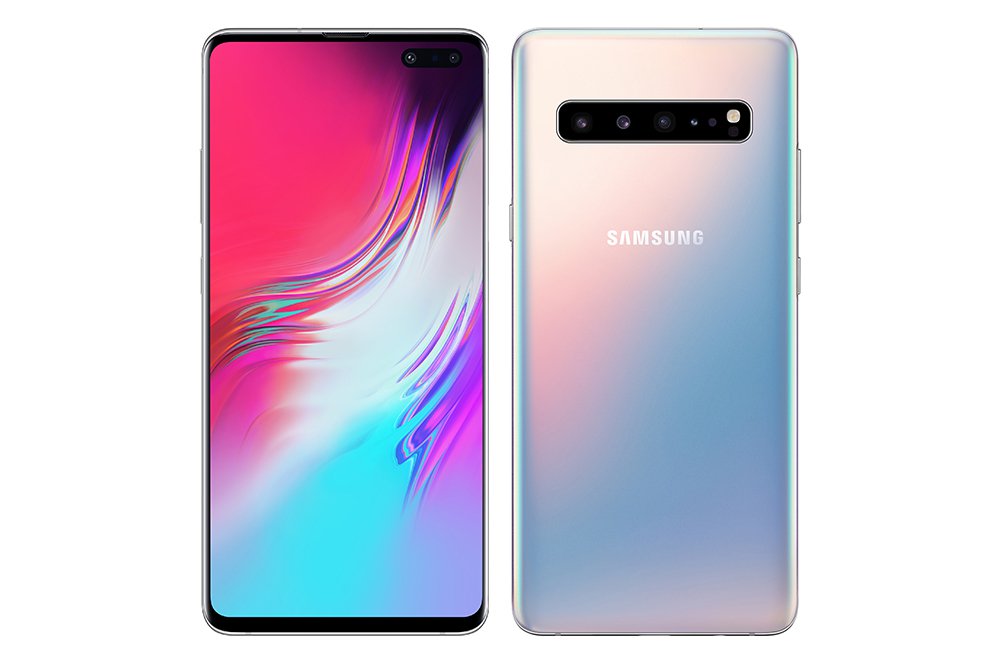
Samsung Galaxy S10 5G
If 5G is an important feature for you and you're not sold on the Reno 5G, you might want to consider the Galaxy S10 5G. It doesn't have the same kind of 5x optical zoom you'll get on the Reno, but Samsung has kitted it out with a quad camera setup featuring a standard lens, a 2x zoom lens, an ultra-wide angle lens, and a Time-of-Flight sensor for capturing additional depth. However, the S10 5G is a little bit pricier.
Alex Choros

Related Articles


