
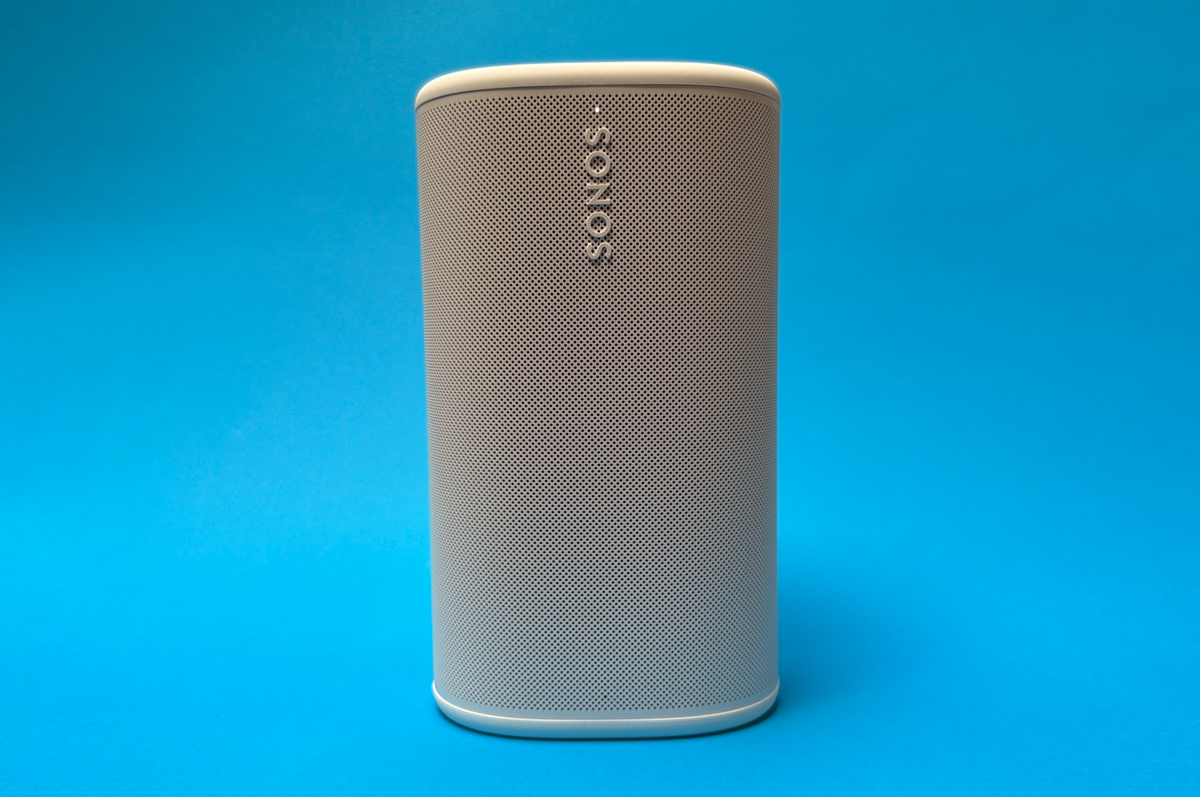
- Solid sound quality
- 24-hour battery
- The loop is cute and functional!
- A little too heavy to be truly portable
- Poor sub-bass
- Expensive
As Sonos’ first major product launch since it went into crisis mode following its bungled app revamp in 2024, my expectations were high for the Play. The speakers that introduced me to Sonos all used the “Play” branding, and surely the manufacturer was going to surprise and delight with its comeback device. Sonos, after all, has a history of exceeding expectations.
Unfortunately, the reality is a little more down-to-earth. There’s a lot to like about the Sonos Play, but it doesn’t feel ambitious enough.
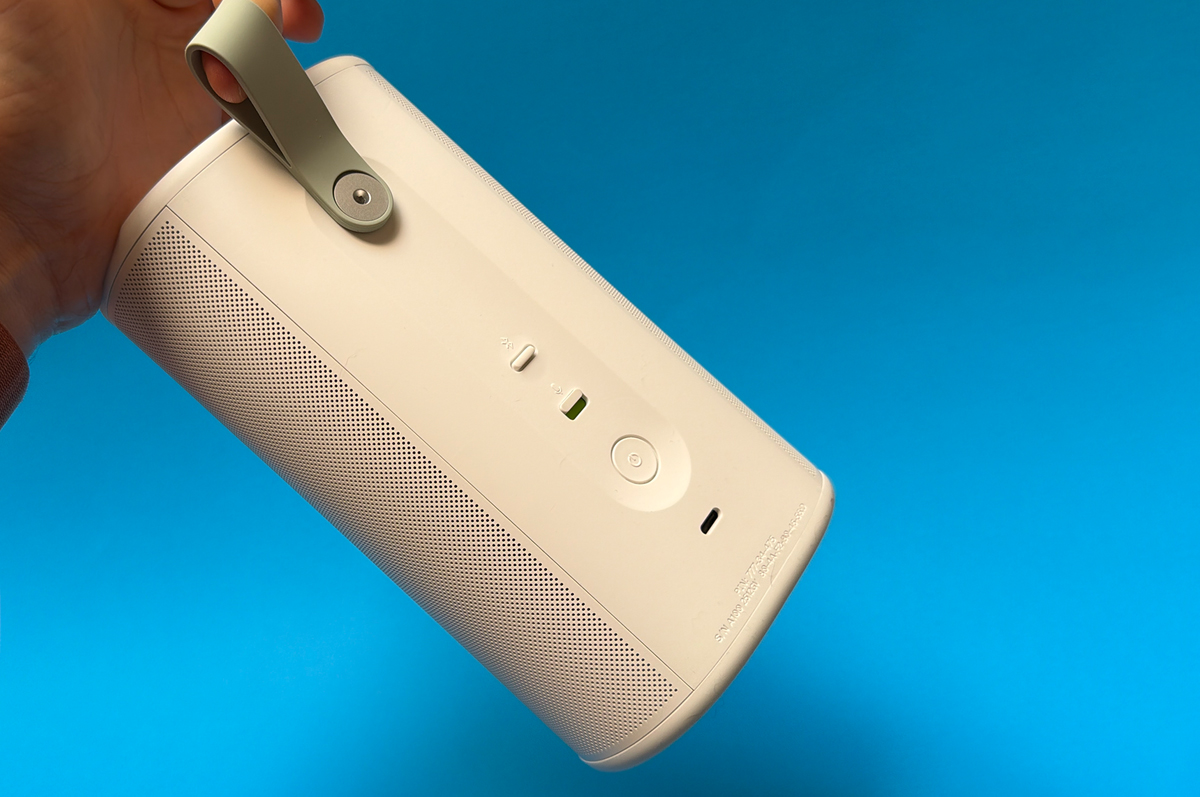
The Sonos Play is the middle child in the brand’s family of portable speakers, sitting between the ultra-portable Roam and the not-very-portable Move. Weighing in at just over 1kg, it isn’t the kind of speaker you’d throw in your backpack, but you might consider putting it in your luggage for a weekend away. It doesn’t feel as confined to the house as the 3kg or so Move family have been. If I had the allowance, I could see myself putting it in a suitcase, but it wouldn’t be a must-pack.
When it comes to audio quality, the Sonos Play sounds pretty good for the money, but not great. While it is built from similar hardware to the Era 100, it isn’t as full. There’s narrower stereo separation and the sub-bass isn’t as pronounced. Childish Gambino’s “3005” is robbed of its powerful thump, and the ping-ponging instrumentation that starts Pink Floyd’s “Comfortably Numb” doesn’t have much presence. Otherwise, the Sonos Play has a good balance and clarity. Even chaotic death metal like Opeth’s “The Funeral Portrait” sounds crisp and clear.
In a way, the audio trade-offs the Play makes when compared to the Era 100 make sense. Despite sharing components, the Play is physically smaller than the Era 100. But at the same time, the Play is $499 while the Era 100 is $319 (or $30 cheaper if you opt for the version without voice control). Sure, the Era 100 isn’t portable, but is portability worth $180 when you’re also getting worse sound quality?
Obviously, it isn’t quite that simple. The Sonos Play also has additions like a cute little loop for moving it around, IP67 water-resistance, and a charging base station. You can get up to 24 hours of battery life per charge, which is pretty solid, and the battery is also replaceable, which I love from a sustainability perspective. What I don’t love as much is there’s no power brick in the box, given the $499 asking price. Sonos charges $49 for its first-party option, but you can use one you’ve already got or buy a third-party charger. All you need is something with a minimum of 18W.
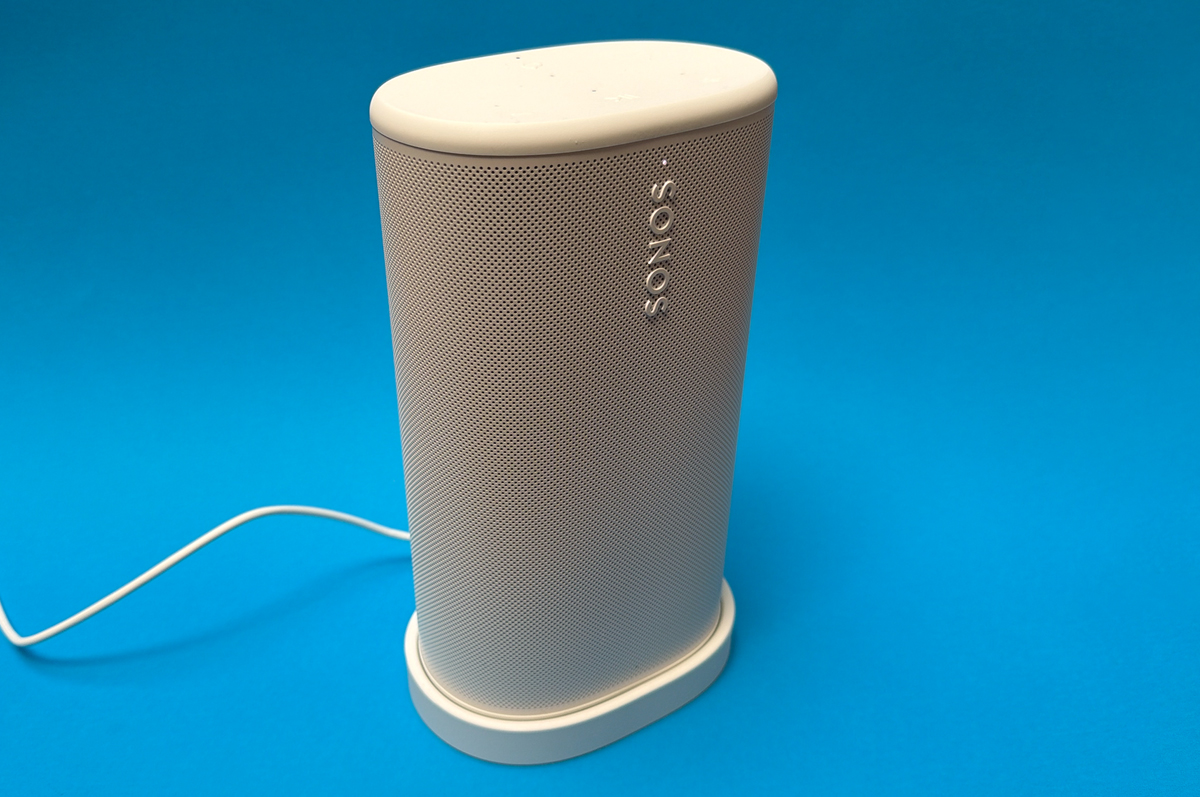
And as always, the Play continues to showcase some of the company’s best traits. It’s very easy to set up, and still has Sonos’ newfound penchant for versatility. You can use it like a traditional Sonos multi-room speaker on your WiFi, but there’s also Bluetooth and line-in. Just note the line-in is done over USB-C, so you may need to purchase an extra dongle if you want to connect a device with a 3.5mm output.
Sonos Play - Final Thoughts
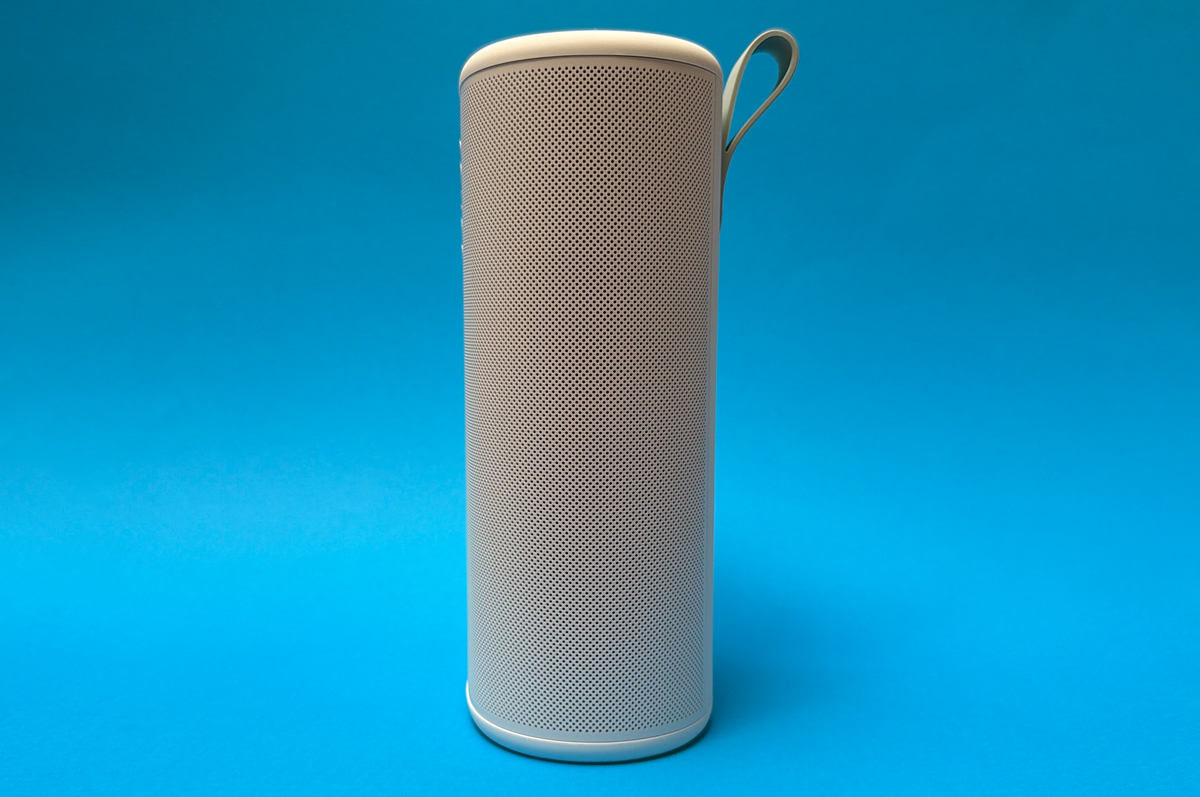
The Sonos Play is a good speaker, but for a comeback, I wanted more. It fills a gap in the Sonos portfolio by introducing a mid-tier portable speaker, but it doesn’t really wow. The sound doesn’t overdeliver, it’s heavier than you’d hope, and $499 certainly isn’t exactly pocket change. If Sonos had tweaked any of these three variables, the Play could have been more exciting, but as it stands, it’s functional.
Existing Sonos fans might like this as a portable speaker that is beefier than the Roam without costing as much as Move 2, and it certainly isn’t a bad entry point into the ecosystem. I just think Sonos could have pushed a little harder with the Play. Instead of “we’re so back”, all we got is “we’re back”.
Did you like this article? Good! Why not make us a preferred source in Google? Click below, tick the box, and WhistleOut stories will show up more often when you search for related content.
Alex Choros

Related Articles


