
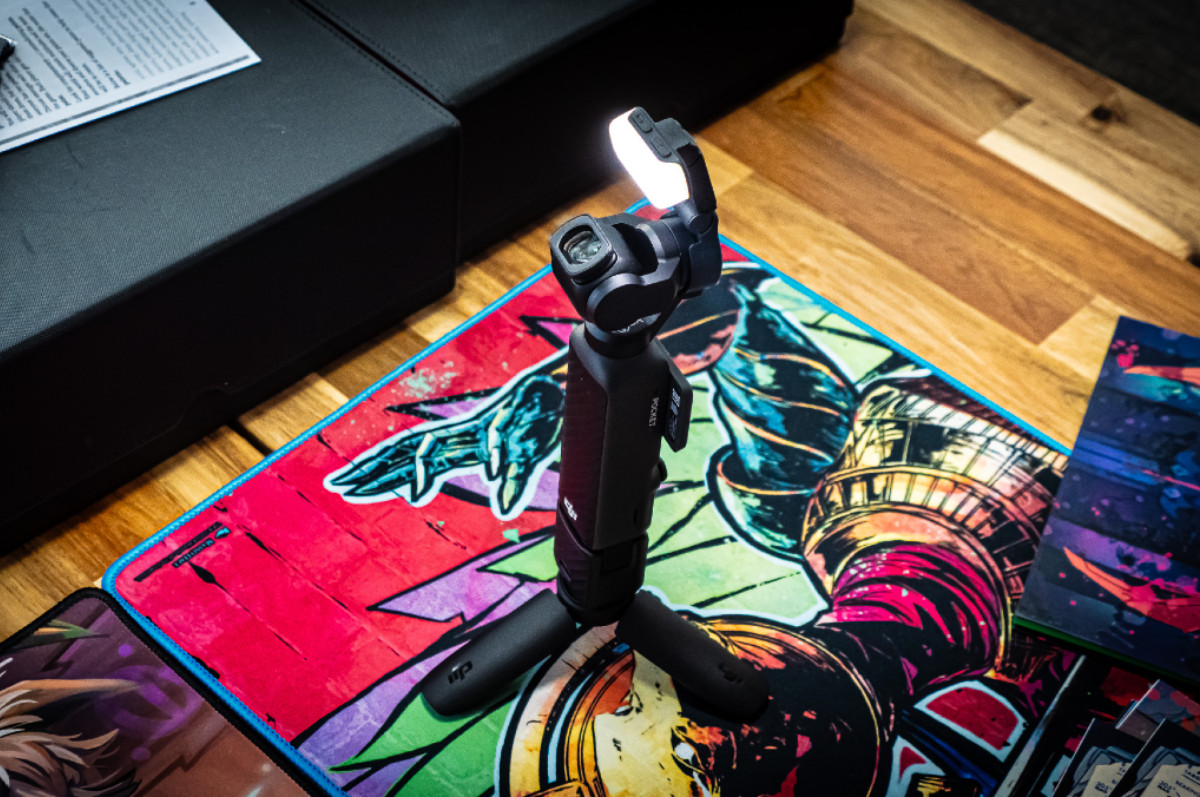
- Slick and versatile videography
- Built-in storage
- Software pain
- Previous model is much cheaper
The DJI Osmo Pocket 4 is less of a leap forward than its predecessor was, but the under-the-hood improvements here are easy to like – though perhaps a harder sell in a time when new tech is getting ever more expensive.
The drone-makers goofy get-together of camcorder and gimbal has come a long way since its earliest incarnation, but the fourth take on the formula isn’t nearly as large an upgrade as the one that preceded it. Most will likely struggle to tell the difference between the DJI Osmo Pocket 4 and DJI Osmo Pocket 3, with the vast majority of meaningful upgrades located under the hood of this hybrid handheld camera.
While the sensor inside the DJI Osmo Pocket 4 is the same size as the one found in the previous model, it comes geared to deliver better results. That upscaled ambition translates into more dynamic range, higher resolution on stills, plus support for filming 4K at a higher 240 frames-per-second. Beyond the optics, the fourth incarnation of the Osmo Pocket also boasts improved subject tracking, longer battery life, and a whopping 107GB of on-board storage.
If you’re more of an everyday user, these spec bumps might not mean a whole lot. However, for prosumer-types eyeing this as a primary content capture machine, that extra bump to the boundaries of what the hardware is probably going to be a meaningful one. For instance, being able to shoot at 4K at 240FPS means that you don’t have to trade off in resolution whenever you want to shoot something in slow-motion.
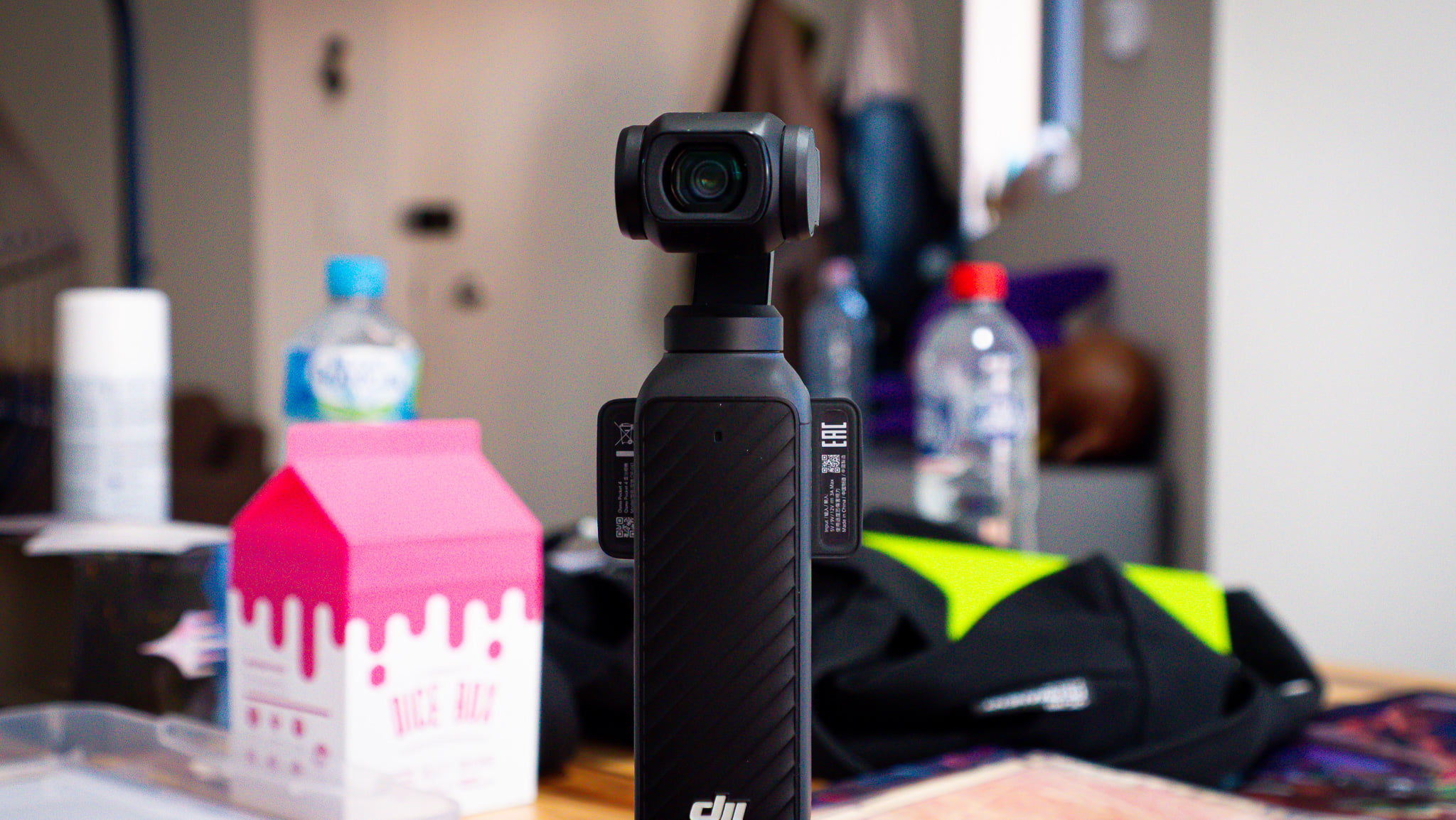
Even if you’re not the kind of sicko who gets hyped up over the abolishment of edge-case compromises, the addition of on-board storage does a lot to make this version of the Osmo easier to pick up and use in a pinch. Unfortunately, you do still have to go through the rigmarole of installing the DJI Mimo App – which isn’t available on the Android app store – to get access to the full experience.
Having to download an APK file via the DJI website isn’t necessarily a new issue, but it’s definitely worth knowing before you take the plunge. It didn't help that I found my first few attempts to set up the Osmo 4 waylaid by a bizarre bug that required me to enter an alphanumeric two-factor authentication code into a textbox that only accepted numerals.
The experience for those on iOS is a bit more conventional, with the DJI Mimo app able to be found and downloaded as you'd expect. Still, it’s a shame that this software pain remains the biggest thorn in the side of DJI’s videography-first take on a traditional camera because everything that worked about the Osmo Pocket 3 works just as well here.
Once set up, the DJI Mimo app lets you access, download and edit video content recorded using the Osmo Pocket 4. It's not the best video editing app I've ever used, but it is a fairly decent alternative to the usual process of transferring your video content off the camera via a MicroSD card and reader.
As with its predecessor, you activate the Osmo Pocket 4 by flicking the display from its usual vertical orientation to a horizontal one. Give it five or so seconds, and you're good to start filming. This experience is more tactile than filming with a smartphone but more frictionless than that of a traditional camera. The Osmo Pocket 4 is not just easy to use, but feels fun in a way that makes you want to use it more.
The touch-screen-based interface is comprehensive without being overly convoluted, and once you're locked onto a subject, the gimbal allows for smooth camerawork that rarely loses its focus. As with the Osmo 3, the joystick is sometimes a little sensitive, but the ability to opt for manual control is nice to have regardless.
Having said all that, it’s hard to deny that the biggest competition for the Osmo Pocket 4 is its predecessor. The invisible improvements in this incarnation of DJI’s ambitious action-cam do make it a tool that’s better at all the things that it’s trying to do, but I wouldn’t say that they add up to anything transformative. If you can afford it, I doubt you’ll be disappointed with what the Osmo Pocket 4 has to offer, but its predecessor will get you most of the way there at a significantly lower price.
Still, if you can afford the premium, the Osmo Pocket 4 will take you further. You won’t be disappointed, though you will be a little poorer. DJI’s Osmo Pocket 4 offers upgrades that are hard to see but easy to appreciate.
We've spent enough time with this product to piece together our thoughts, but not enough time to put it through our official testing process. We've got a good sense of what is good, what could be improved, and whether it is worth your money, but we're not assigning a score to this one.
Fergus Halliday
Digital Content Editor

Related Articles


