

Huawei P20 Pro Review: The Verdict
The Huawei P20 Pro's camera is good enough to make you forget almost any caveat, but fortunately there's very few of those. Better yet, at just $1,099 outright, the P20 Pro is one of the most affordable top-tier smartphones around.
What we love
- Incredible photo quality
- Two-day battery life
- Top-tier performance
- Great value for a flagship
What could be improved
- Notch will be divisive, some apps have issues with it
- Too much preinstalled software
- No headphone jack
The essentials
- Performance: Super fast, as you'd expect.
- Battery: Should comfortably last two full days.
- Screen: Bright and vivid. Technically a lower resolution than some its competition, but it's barely noticeable.
- Camera: Actually amazing. Takes excellent photos reliably.
90/100
$1,099
Want to make an iPhone owner jealous? Show them a photo you've taken with the Huawei P20 Pro.
Let's start with a quick photo comparison. Here's a shot of Walsh Bay we took on the iPhone X.

And here's the same shot from the Huawei P20 Pro.

The difference is staggering. While the image from the iPhone X is very good for a smartphone, the image from the P20 Pro is exceptional. It's more vibrant, more detailed, and exhibits almost no blowout (where bright details become pure white).
Oh, and the P20 Pro is about $500 cheaper than the entry level iPhone X.
It's no exaggeration to call the P20 Pro's camera a generational leap forward. For the past few years, you could pick the latest iPhone, the latest Galaxy, or the latest Pixel and comfortably argue as to why it was the best camera phone on the market. They've all been in reach of one another. The P20 Pro ends this debate; at this point in time, Huawei wins the smartphone camera contest hands down.

Turning tricks
- 6.1-inch 1080p+ display
- Kirin 970
- 128GB storage, 6GB RAM
- 40MP + 20MP + 8MP rear-facing camera
- 4,000mAh battery
- IP67 water-resistance
So you might be asking how Huawei came to have the best camera phone on the market. The simple answer comes down to three rear-facing cameras and a surprising amount of software tricks.
Two rear-facing cameras has become the new standard on high-end phones, but Huawei has increased the count on the P20 Pro, once again co-branded with luxury camera manufacturer Leica. The triple camera array is made up of a 40MP primary lens, a 20MP monochrome lens, and an 8MP telephoto lens.
40MP might sound massive, but by default, the P20 Pro will combine data from the adjacent pixels to create a brighter, clearer 10MP image. But if you'd prefer, you can still take a 40MP photo.
The monochrome lens is used for depth estimation to simulate bokeh (the out of focus areas behind a subject), and the fine details and lower noise levels are said to improve image quality when zooming and in lowlight. There's also a monochrome mode, which makes it easy to take pretty dramatic images.

Lastly, the 8MP telephoto lens is used to assist with zoom. Working in tandem with the other phone's cameras, you'll get the equivalent of 3x optical zoom, 5x hybrid zoom (mixing data from multiple cameras to retrain or rebuild more detail when zooming in), and 10x digital zoom.

This might all sound a bit complicated, but all you really need to know is the P20 Pro uses these three lenses coupled with some smart software to consistently take amazing photos. And you can go even further by using some of its dedicated capture modes to get even better results. Here's a brief look at some of what's on offer:
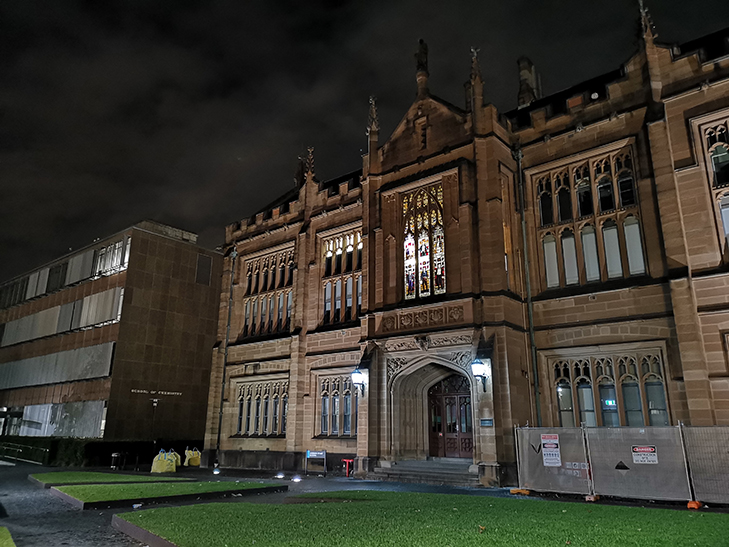
Night mode: Night mode uses exposure bracketing to get a more detailed image at night. Essentially, the P20 Pro will take multiple photos at different exposures over a short period of time and stitch them together to provide a little extra pop. While having steady hands helps, the P20 Pro is able to account for camera movement using "AI stabilisation".

Night mode works best for landscape or architecture photos, as moving objects can interfere with the shot. While the software is smart enough to occasionally compensate for a person moving in the background of your shot, too much movement can flub the photo. A clear light source helps too; if you're shooting in an environment without something for the P20 Pro to lock onto, the result image can end up blurry.
Despite the name, night mode can produce stunning results at other times of day; sunsets and sunrises can look incredible.

Portrait mode: The P20 Pro's portrait mode is standard fare. Shoot a picture of a person, and the P20 Pro will blur the background.

Huawei's also taken a few tricks from Apple's playbook; namely, portrait lighting effects. These essentially amount to image fakery that allows you to recreate shadows and highlights you'd typically achieve with dedicated lights, and they actually look great when they land. You can however end up with some irregularities around facial extremities - especially in the modes that replace the background with black. To be fair, the iPhone 8 Plus and iPhone X still have the same problem.

Light painting: Light painting is a form of long exposure photography where you move a light source to "draw" an image in your photo. The P20 Pro has a dedicated capture mode for this, but for best results, you'll want to use a tripod, as the phone's stabilisation can only compensate for so much movement in this mode.

You can get nifty results by even shooting something as simple as cars on a highway.

There's still plenty more in terms of what the P20 Pro camera can do; it feels like we're only scratching the surface. There's a dedicated Pro mode with manual controls similar to what you'd find on a DSLR, there's slow motion video, a time lapse option, and more. It's the kind of camera where you can constantly discover new tricks.
If you had to fault the P20's Pro camera on anything, it can be a bit aggressive with noise reduction. This, when combined with down-sampling a 40MP photo to 10MP, can obscure some fine detail in lowlight images. You won't notice this most of the time unless you're looking at a 100% crop of a photo, but it can make faces look a little bit softer, especially at night.
All in all, the Huawei P20 Pro's camera is presently in a league of its own, thanks to its reliability, versatility, and the sheer amount of detail it captures.

Yes, it's still a phone
It's easy to forget we're actually talking about a smartphone, not just a camera. Fortunately, the Huawei P20 Pro is more than just an excellent camera, it's a great smartphone too.
In some ways, the P20 Pro is what you'd expect from a flagship handset in 2018. It has an extra-tall display with a notch, the back is glass, and there's no headphone jack. You also get pretty zippy facial recognition, but there's still a fingerprint reader on the front, if you prefer a more traditional way of unlocking your phone.
Notched displays seem to be a "love it or hate it" type deal, but there's (mostly) good news if you're in the latter category. Huawei lets you black out the P20 Pro's notch, giving the appearance of a more conventional display. Since P20's display uses an OLED panel (where pixels turn off entirely when they're displaying black), the area surrounding the notch almost seamlessly blends into the phone's bezel.
Notification icons, the time, your battery life indicator, et al are still displayed in the notch area, regardless of whether it's blacked out or not. Blacking out the notch can however cause issues with some apps - Instagram and Facebook Messenger, for example - where part of the user interface is cut off. They're still usable, but we're hoping that this is addressed in future updates.

Glass backs are becoming the norm with high-end smartphones, but the P20 Pro's "Twilight" option is easily the most unique smartphone colourway around. Rather than just a single colour on the back, Twilight fades from cyan to purple, and it's stunning.
Black - as pictured in our photos - still looks nice, it just won't turn heads in the same way. Whatever colour you pick, expect it to get covered in fingerprints quickly. There's a case in the box that can help your phone looking pretty (and balance out the camera bump), but it feels a little cheap.
The lack of a headphone jack isn't exactly ideal - it's not a trend we love - but you get an okay pair of USB Type-C headphones and a USB Type-C to 3.5mm adapter in the box.
As with all Huawei smartphones, the P20 Pro runs EMUI - Huawei's customised take on Android. EMUI has certainly been a divisive issue in the past, but it's been toned down heavily this time around. The main variations from stock Android come down to some differences in menus and a few custom app icons. The app drawer is hidden by default, but it's easy to bring back.
While past Huawei phones have had me scrambling to do undo as much of the company's customisations as I could, I haven't felt that need this time around. Our only real complain is there's a few too many preloaded apps out of the box - Dragon Mania, Disney Magic Kingdoms, Puzzle Pets, and whatever Z Camera is - to name a few, but these can all be uninstalled if you don't want them.
A flagship trend the P20 Pro bucks is a single day battery. Whether it's the iPhone X, the Galaxy S9, or the Pixel 2 XL, most top-tier smartphones struggle to get more than a day of battery. This isn't the case with the P20 Pro. The hefty 4,000mAh cell will easily get you a day at a half at a minimum. In most cases, you should be able to get two full days in between charges.
One odd Android staple you won't find on the P20 Pro is expandable storage. We're not quite sure why, but at the least, you get 128GB out of the box. And the space normally used for a microSD card can still be used for a second SIM. Notably, the P20 Pro supports 4G connectivity on both SIM cards (most dual SIM phones available in Australia only have 4G on the primary SIM).

Who's the Huawei P20 Pro for?
When it comes to high-end phones, it doesn't feel we're writing about phones anymore. We're writing about cameras. The cameras happen to be phones, but photo quality is increasingly becoming the main differentiator. And when it comes to the P20 Pro, it truly stands out. If you want the best camera phone around right now, this is it.
The Huawei P20 Pro's camera is good enough to make you forget almost any caveat, but there's almost none. Performance is top tier, the battery life is better than almost any other flagship phone, and the display is stunning. No headphone jack or expandable storage are small niggles, but they're hardly deal breakers. I guess you could fault the P20 Pro for not being an iPhone, but that's always going to stop some people.
No matter how good a smartphone camera is, switching from iOS to Android can seem like an insurmountable feat (and vice-versa to be fair), especially after 10 or so years of familiarity, App Store purchases, and ecosystem lock-in. But at the very least, the P20 Pro's camera is the kind of killer feature that could turn anyone who loves photography into a turncoat. Well, make them consider it.
There's one other thing: unlike past P-series phones, you can't get this one on a 24-month contract, so you're looking at outright cost of $1,099. But given that it's undercutting its contemporaries by at least a couple of hundred, the Huawei P20 Pro is easily the best value flagship on the market.

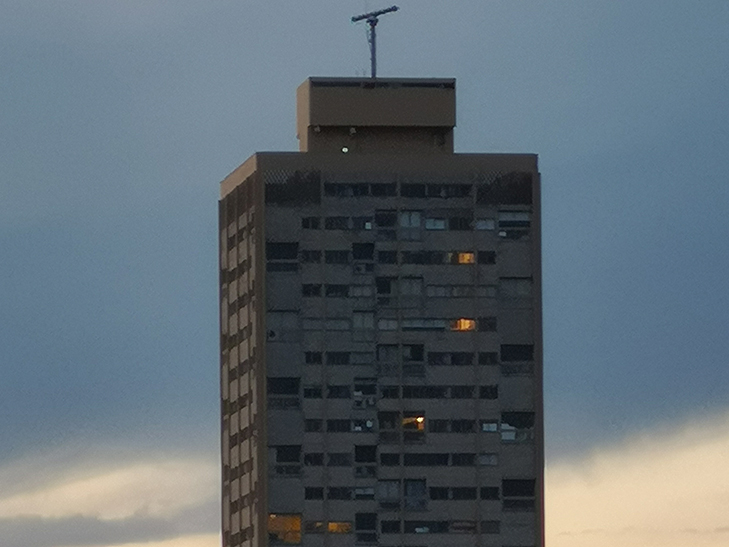
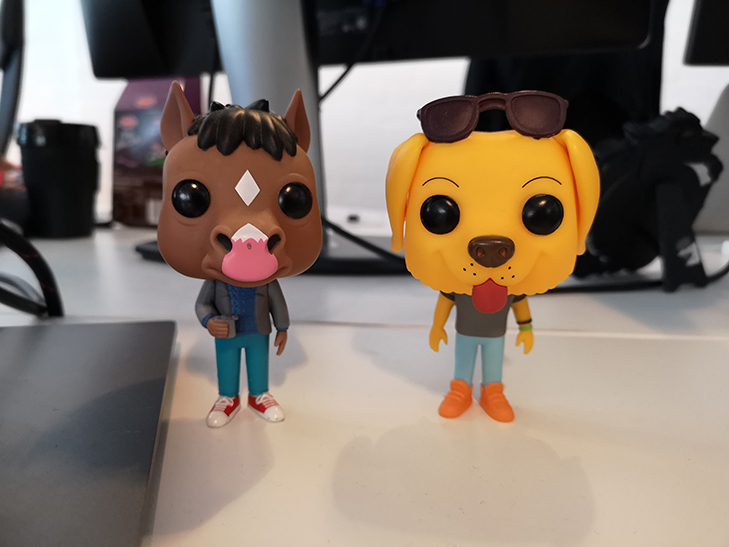
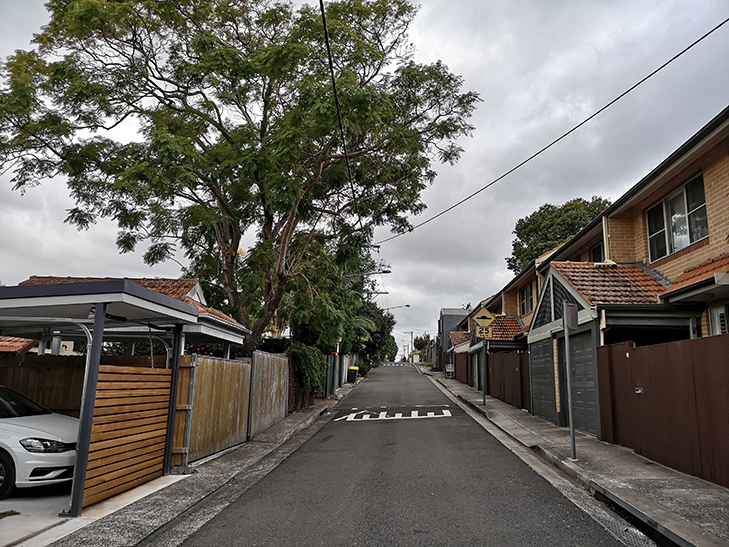
More Huawei P20 Pro camera samples








I don't want a Huawei P20 Pro, what else can I buy?
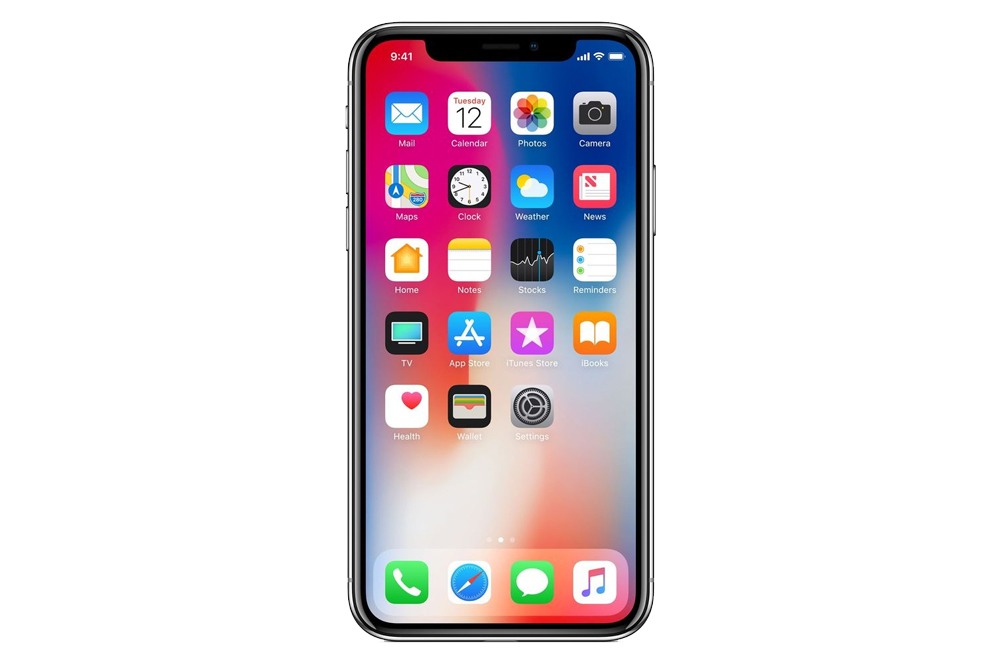
iPhone X
If you want a smartphone with a great camera but don't want an Android-powered device, an iPhone is really your only other option. The iPhone X might be pricey, but it's also the best iPhone around, with the best iPhone camera. And it's a great phone in general, if you can stomach the cost. 
Google Pixel 2
If you'd prefer a phone that runs an entirely clean version of Android, the Pixel 2 or Pixel 2 XL are worth considering. They're a little pricier, but they're still great phones with great cameras.
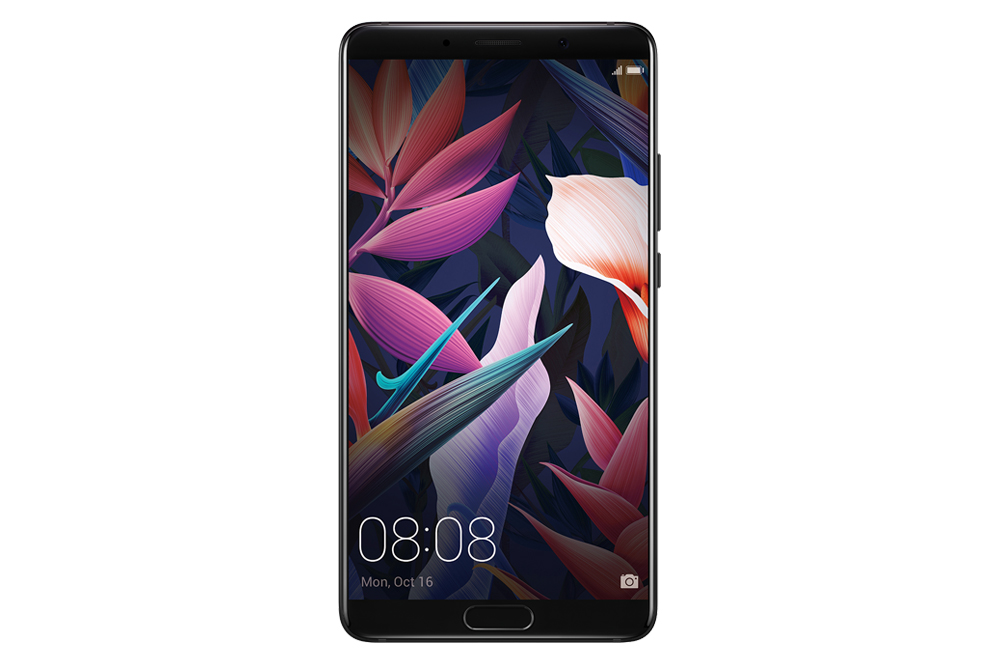
Huawei Mate 10
If you'd rather save some money, it's worth considering the Huawei Mate 10. The camera isn't quite as good as what you'll find on the P20 Pro, but it's nonetheless an excellent all round device. Better yet, it's now available for $799, and it still has a headphone jack.
Alex Choros

Related Articles


