
 Prefer WhistleOut in Google
One of the biggest selling points of foldable devices was the promise of a new form-factor. The fact that your smartphone could now bend it like Beckham was novel, but the fact that functionality required a different shape to the usual glass-sandwich probably did a lot to help justify the price tag.
After a few years, the foldable category has largely settled into the same kind of familiar iteration seen across the rest of the smartphone market. Every year, the likes of Samsung’s Galaxy Z Flip and Galaxy Z Fold get a little better – but they rarely change in ways that go beyond a spec bump.
That rhythm might be due for a shake-up in 2026, with a third foldable form-factor set to hit the market on multiple fronts. Although this niche had yet to nab itself a proper name, this new wave of foldable devices promises to offer a middle ground between the bigger tablet-like experience offered by devices like the OPPO Find N6 and more compact options like the Motorola Razr.
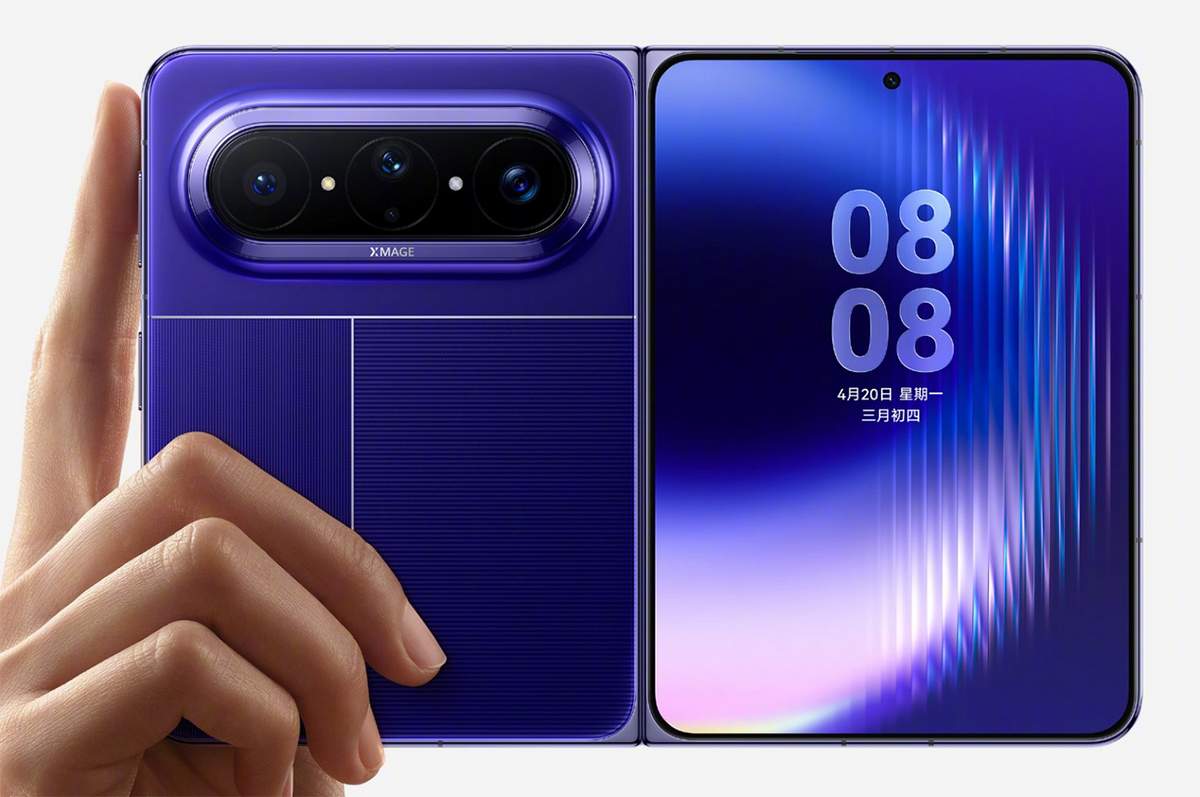
The first cab off the rank here is the Huawei Pura X Max. This device launched in April and while it isn’t officially available in Australia, early reports suggest that its new take on a foldable form-factor has early proven a hit. One report has claimed that the device has already sold as many as 200,000 units in its first fortnight on sale.
In terms of the display specs, the Huawei Pura X Max features a 5.4-inch cover display and a 7.7-inch inner screen. As opposed to something like the Pixel 10 Pro Fold, which features a 6.4-inch cover screen and an 8-inch inner display, the form-factor and aspect ratio here is more square in shape.
When the screen is folded up, you’re getting a similar experience to something like the iPhone Mini. Then, when you need a larger screen to work with, the extra pixels offered by the inner display promise to allow more tablet-style multitasking and more immersive video viewing since you won't have to worry about any weird black bars.
Unfortunately, given the state of Huawei in Australia, I wouldn’t expect this one to be available anywhere outside of grey-market importers anytime soon. While you can find a fair few of the brand’s audio and wearable products on store shelves nowadays, the brand’s smartphones have been missing from the market for several years.
Fortunately, if you’re after a wider foldable smartphone in 2026, the Huawei Pura X Max is unlikely to be your only option. Following the unceremonious retirement of the Galaxy Z TriFold earlier this year, Samsung is rumoured to be adding a new foldable smartphone to its roster.
According to the leaks, the upcoming Galaxy Z Fold 8 and Galaxy Z Flip 8 will launch alongside the new Galaxy Z Fold 8 Wide. If the rumours are true, this new foldable will come with a 5.4-inch cover display and a 7.6-inch inner display – sitting between its siblings in terms of size.
The fact that both Huawei and Samsung are converging on this same squared-off form-factor is interesting to begin with, but it's the third player in this race to find the next big thing for foldables that really raises the stakes: Apple.
The rumour mill is in full swing ahead of the company’s September showcase – where Apple’s first-ever foldable is tipped to make its debut. What’s more, this device – which we’re going to refer to in lieu of an official name as the iPhone Fold – is said to fit into that increasingly familiar middle ground that both the Galaxy Z Fold 8 Wide and Huawei Pura x Max seem to be chasing.
On the outside, the iPhone Fold is said to have a 5.5-inch cover display. Then, on the inside, it’ll come kitted out with a larger 7.8-inch display. Throw in a chunky titanium frame, and it sounds like we’ll be looking at a foldable that’s wider than anything else on the market.
Although some reports suggest that the launch of the iPhone Fold could slip into 2027, Bloomberg’s Mark Gurman – a longtime Apple leaker with a track record of knowing what’s up – reckons it'll launch alongside the iPhone 18 Pro later this year.
Speaking to WhistleOut Australia, Telsyte’s Alvin Lee said that the segment is still maturing, noting that the first mainstream device only launched in 2019. Citing Telsyte research, he said foldables are a growing category and that a potential Apple entry would add “significant” momentum.
“The potential shift toward a wider form factor across multiple vendors suggests the industry is still actively working out where the best experience lives for both users and developers,” he said.
Whether this middle ground between what big-screen foldables and their flip-phone inspired counterparts offer has any staying power remains to be seen, but a new form-factor might be just the thing to kickstart the next wave of foldable adoption or device upgrades.
If that proves to be the case, then 2026 really could be the year that foldable went wide.
Fergus Halliday
Digital Content Editor

Related Articles


