
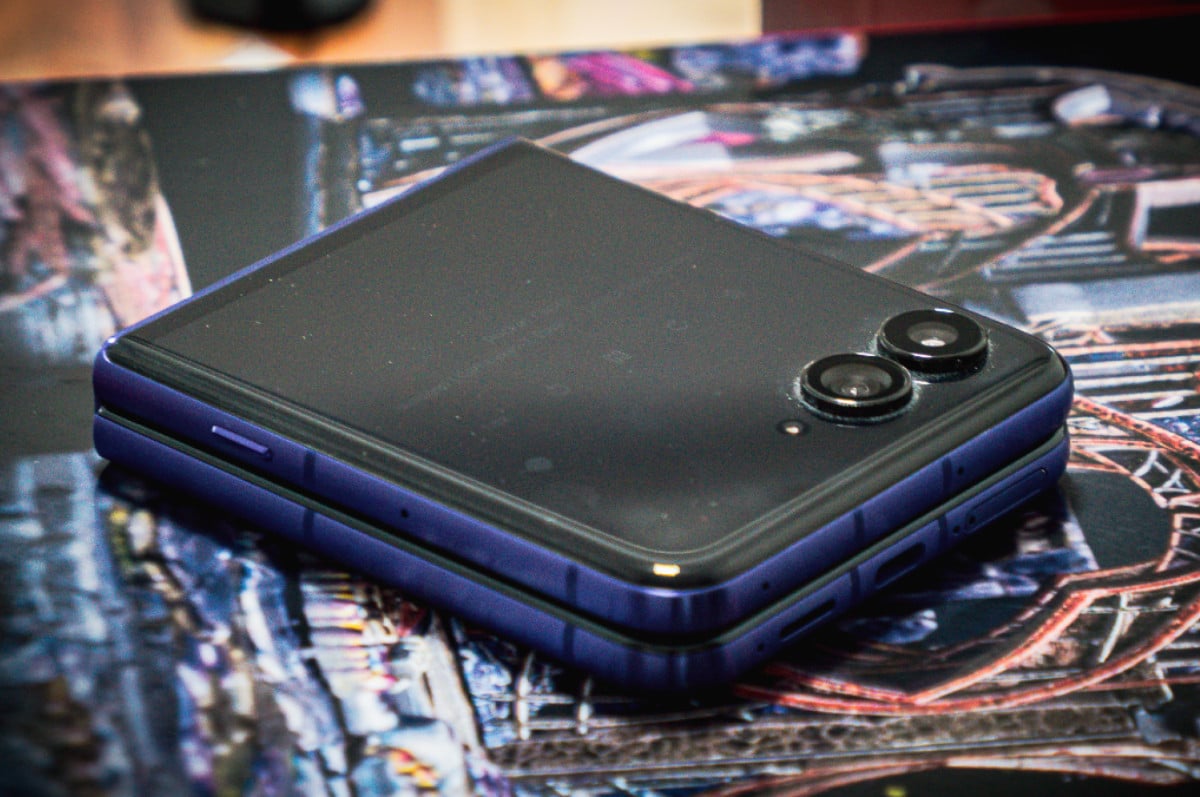
- More accomplished camera hardware
- Fantastic performance
- Surprisingly good battery life
- Inconsistent software experience
- Limited post-launch support
- Eco-leather might not last
With the Galaxy Z Flip 8 feeling like an afterthought within Samsung’s wider product lineup heading into the holidays, the stars couldn’t be more aligned for a device like the Motorola Razr 70 Ultra to attempt to overtake the former as the new frontrunner for flip-style foldable smartphones.
Motorola’s new Razr isn’t a radical reimagining of what a slimmer foldable can look like, but it presses the advantage on all the fronts where Samsung has largely stepped off the gas. It isn’t perfect, but the device feels like the first time that a more compact form-factor doesn’t necessarily have to mean compromises when it comes to camera performance.
Flipping out
That’s not to say it's a massive upgrade though. Those keeping score might quickly notice that the list of differences between this year’s Razr 70 Ultra and last year’s Razr 60 Ultra isn’t a particularly long one. The list of visual differences is even shorter. Perhaps it's a case that Motorola has fallen into the same trap as Samsung, where its appetite to produce more devices like this one at a faster clip has inevitably led to the amount of iteration dwindling.
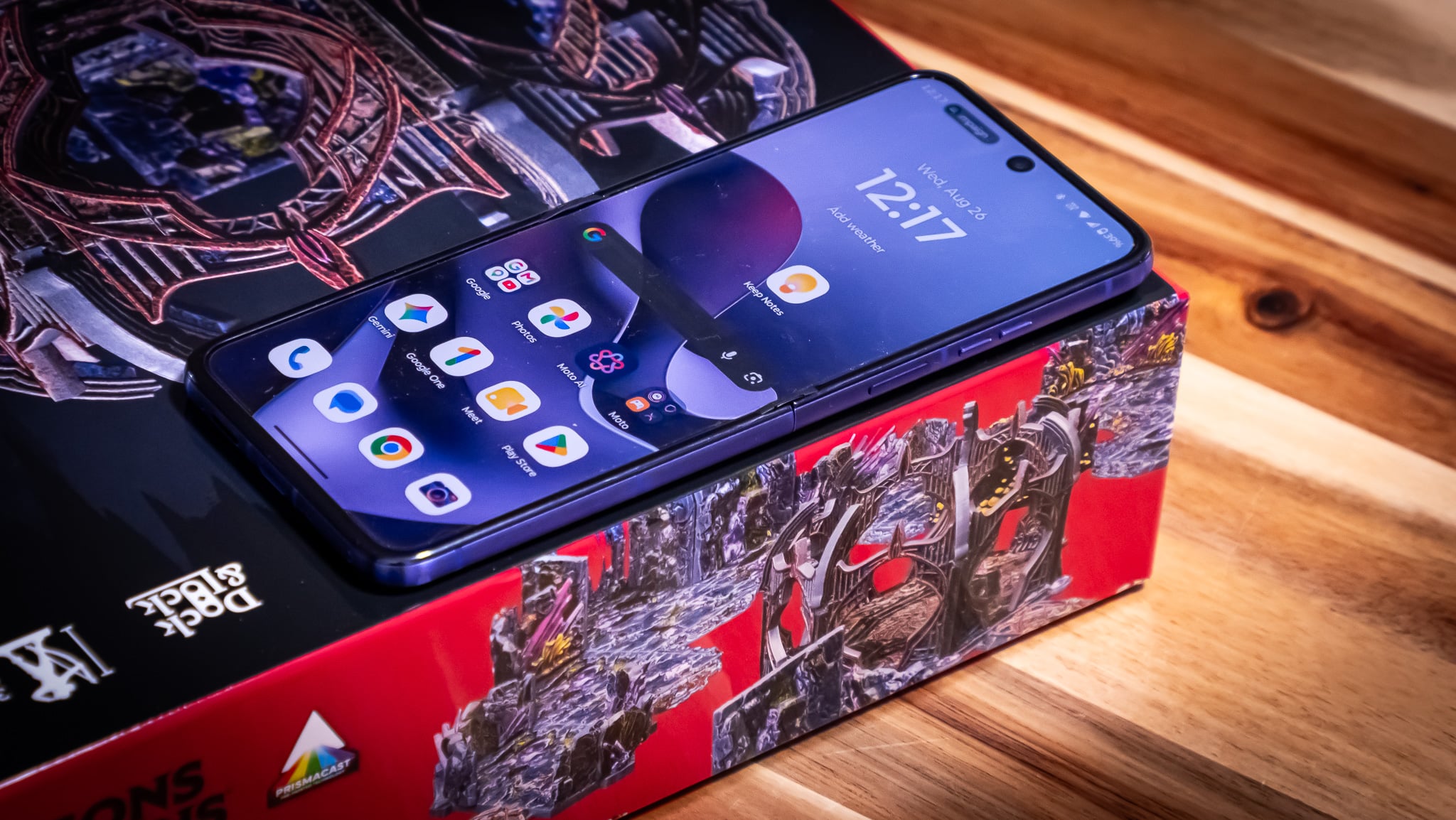
Still, it doesn’t hurt that the foundations of Razr 70 Ultra are what they are. The device features a contemporary clamshell design. On the front, there’s a 4-inch LTPO OLED cover display. Then, on the inside, there is a 7-inch LTPO OLED display.
While the former is identical to the external display found on its predecessor, the latter does come with a slight spec bump that pushes the peak brightness up to 5,000 nits and a slightly superior screen-to-body ratio. Both sides of the Motorola Razr 70 are clocked at a crisp 165Hz refresh rate, which keeps the experience of scrolling on this screen as smooth as it is bright.
Many of the premium perks you’d expect from a handset in this price bracket are accounted for here, as well as a caveat or two. There’s a set of stereo speakers, eSIM support, IP48-water resistance, and a fingerprint sensor – though this is side-mounted rather than built into the foldable display.
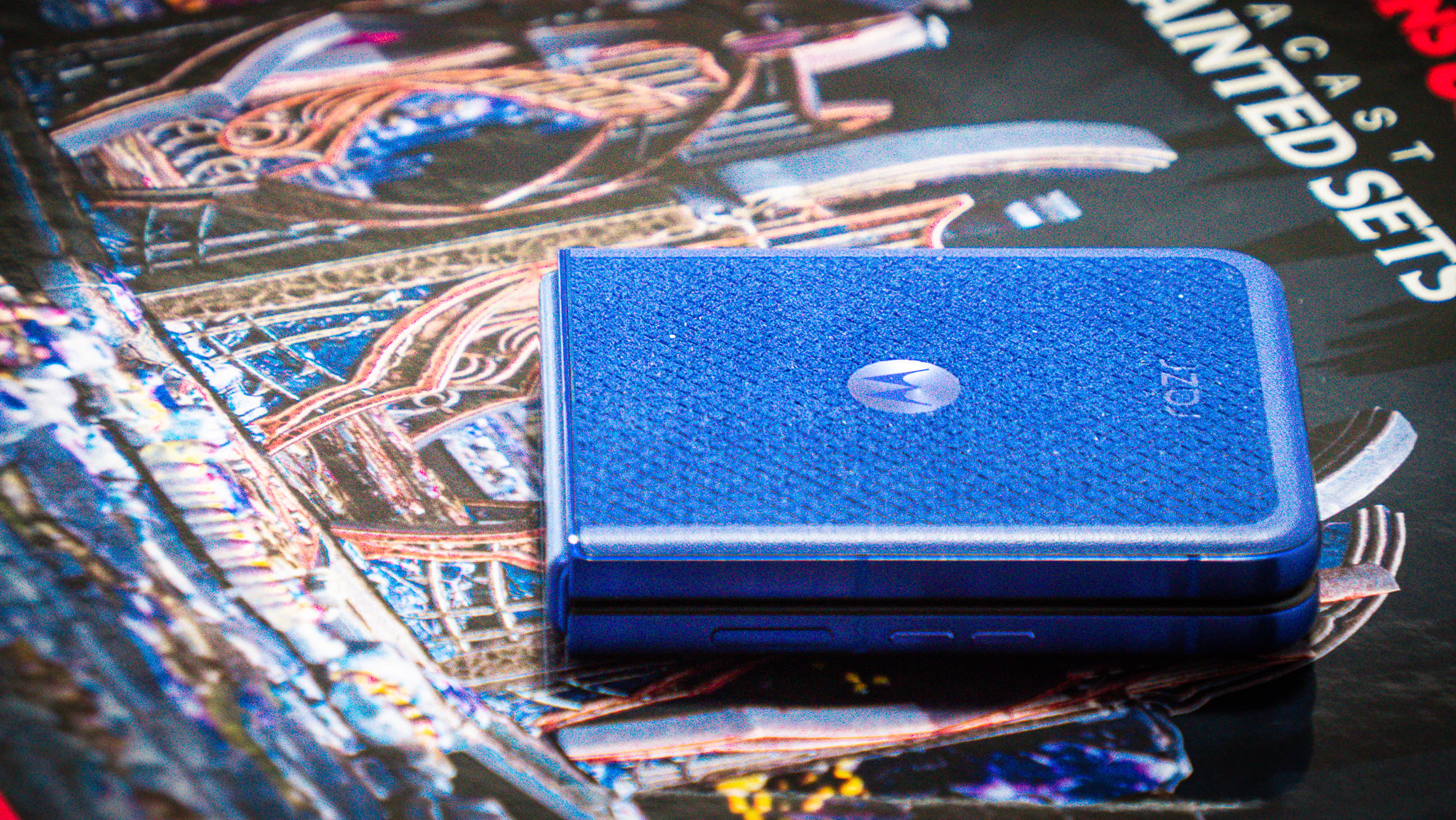
Although more conventional colour options come with an equally conservative material design, the blue version of the Razr 70 Ultra that I tested came with a nifty eco-leather back instead. This works about as well here as it does on any smartphone. I really like the difference in feel it adds, and it does make for a more grippy experience when you’re using the device folded. Unfortunately, the positivity of these factors did little for my usual suspicion that it might not hold up over the long run. It is what it is.
As with the design writ large, Motorola hasn’t tinkered too much with the camera system found on the Razr 70 Ultra. All the same, this front is probably the area where the argument for it over the competition is easiest to make.
Nestled underneath the cover display on the front of the Razr 70 Ultra is a pair of cameras. The first pairs up a 50MP sensor with a wide-angle lens. The second relies on an ultra-wide lens but matches its sibling in megapixels. On the inside, there’s also a third 50MP selfie camera.
On almost every front, this is a significant upgrade on what the hardware that the Galaxy Z Flip 8 has to offer and that was very much reflected in the results that the camera on the back of the Razr 70 Ultra delivered.
Though low-light performance varied widely across the different lenses and sensors, when it came to everyday snaps, the results that this device delivered were genuinely really impressive in a way that stands out from what other flip-style foldables offer.
Motorola Razr 70 Ultra camera samples
For a sense of what the camera on the Motorola Razr 70 Ultra can do fresh out of the box, check out the image gallery below. Click or tap on any photo to see a larger version.








Software snags
Frustratingly, the highs that the Razr 70 Ultra delivered when it came to camera performance weren’t always matched elsewhere.
Under the hood, the Motorola Razr 70 Ultra is powered by a Snapdragon 8 Elite processor and 12GB of RAM. The device also comes with 256GB of storage and a 5,000mAh battery – that last spec is noteworthy in that it is 500mAh larger than the one found in the Razr 60 Ultra. Otherwise, what’s here is more familiar than not. The processor is actually the same as the one found in previous model, but in action it didn't show its age.
When it comes to software support, the Razr 70 Ultra arrives with three years of operating system upgrades and four years of security updates. This doesn’t compare too favourably to the competition. Other Android phones in its price bracket come with at least five years of operating system upgrades, and Samsung devices like the Galaxy Z Flip 8 come with as much as seven.
The disappointments don’t stop there, though. While the everyday performance of the Razr 70 Ultra mostly met the mark and the gaming performance was exactly where it ought to be given the premium parts inside the device, the software experience left a lot to be desired. Particularly when it came to the cover display, the degree to which a given app would play nice with the Razr 70 Ultra’s foldable screen was erratic and unpredictable. Even with relatively mainstream apps like Discord, large chunks of the user interface were cut off or otherwise unusable.
Expecting Motorola to have optimised the hardware here for every possible app or use case isn’t a realistic ask. However, I can’t say that I’ve reviewed any other foldable devices with UI/UX issues anywhere near this frequent. I’ve got plenty of gripes about the lack of ambition that Samsung has had with the Galaxy Z Flip series, but the software side of things isn’t one of them.
In terms of battery life, the Razr 70 Ultra landed a little closer to the mark you’d expect. In practice, I could comfortably get through around a day and a half of usage on a single charge. About twelve hours after leaving my charger behind, I’d be sitting on about 60% battery remaining. I’d usually start my second day of usage at around half charge.
While the hardware here doesn’t offer the longevity that a more heavy-duty handset might, it’s a similar story to the camera setup in that it doesn’t feel like the hybrid hardware comes at a compromise to battery life.
Motorola Razr 70 Ultra - Final Thoughts
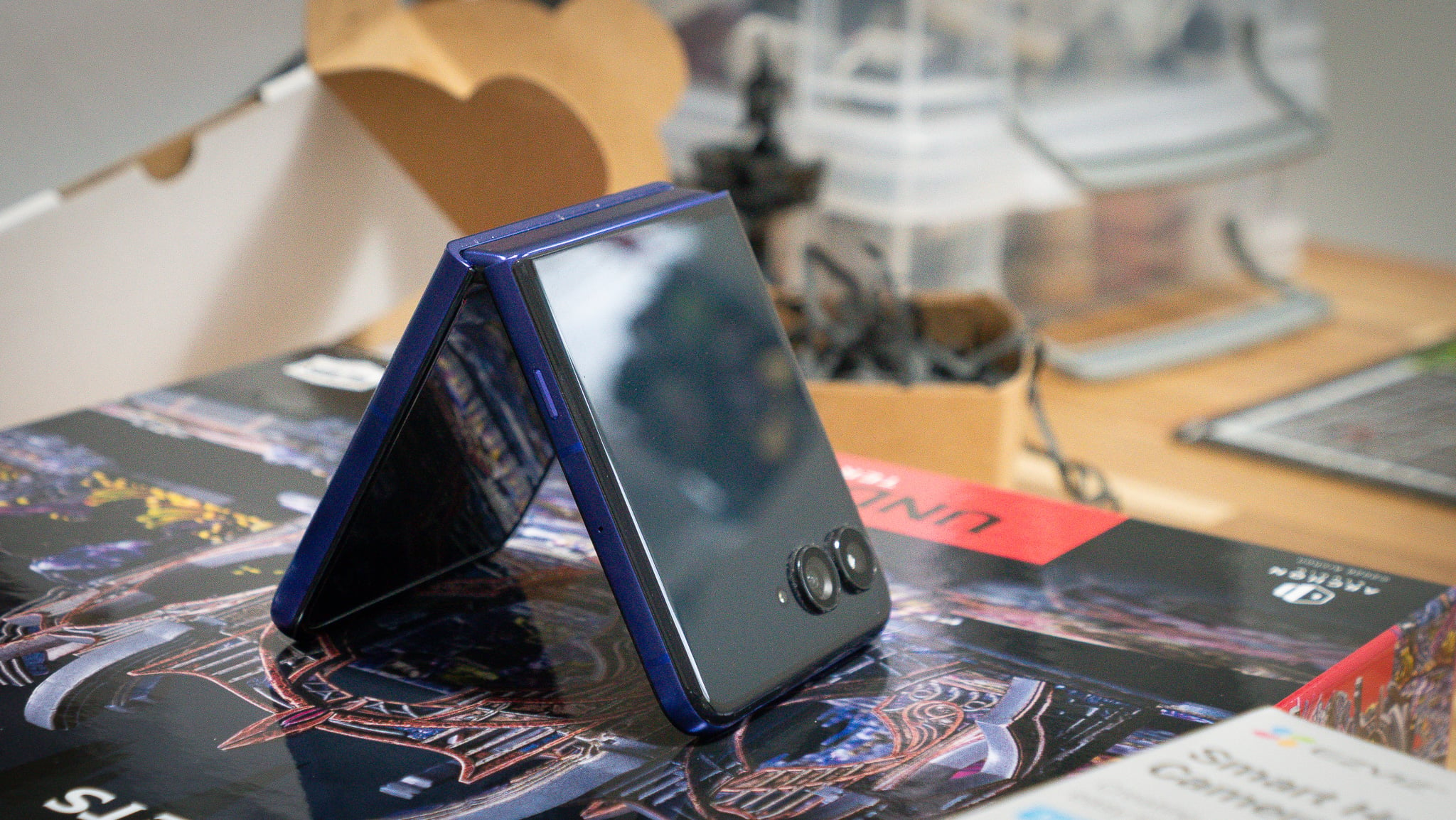
The Motorola Razr 70 Ultra is a sharp rendition of a familiar formula. While it has some key shortcomings and isn’t all that much of an evolution on last year’s Razr 60 Ultra, the argument it makes for itself as an alternative to Samsung’s Galaxy Z Flip 8 remains a compelling one. At least, if you’re swayed by the potential of a more capable rear camera setup.
Those looking to save a few bucks might be sated by what Samsung's latest, but those looking for a compact foldable that doesn’t make the compromises of its competition will probably be well served by what the Razr 70 Ultra has to offer all the same.
These are the most popular NBN 50 plans with WhistleOut users this week:
|
#1
|
Dodo

All Fixed Line nbn®
Editor's Pick
nbn50 Unlimited Plan
$57.99/mth
Min. cost $57.99
|
|
#2
|
amaysim

All Fixed Line nbn®
NBN50
$75/mth
Min. cost $75
|
|
#3
|
Belong

All Fixed Line nbn®
NBN Standard Plus – Unlimited
$55/mth
Min. cost $55
|
|
#4
|
Tangerine Telecom

All Fixed Line nbn®
Value Plus NBN 50/20
$64.90/mth
Min. cost $64.90
|
|
#5
|
Superloop

All Fixed Line nbn®
Extra-value nbn50/20
$69/mth
Min. cost $69
|
|
#6
|
TPG

All Fixed Line nbn®
nbn50 Unlimited Plan
$69.99/mth
Min. cost $69.99
Link not supplied
|
|
#7
|
iiNet

All Fixed Line nbn®
nbn50 Liimitless
$69.99/mth
+ $10 Upfront
Min. cost $79.99
Link not supplied
|
|
#8
|
Kogan Internet

All Fixed Line nbn®
Silver Unlimited
$69.90/mth
Min. cost $69.90
|
|
#9
|
Flip

All Fixed Line nbn®
Unlimited Family nbn50
$68/mth
Min. cost $68
|
|
#10
|
Vodafone

All Fixed Line nbn®
Essential+ nbn®
$94/mth
Min. cost $94
Link not supplied
|

Fergus Halliday
Digital Content Editor

Related Articles


