
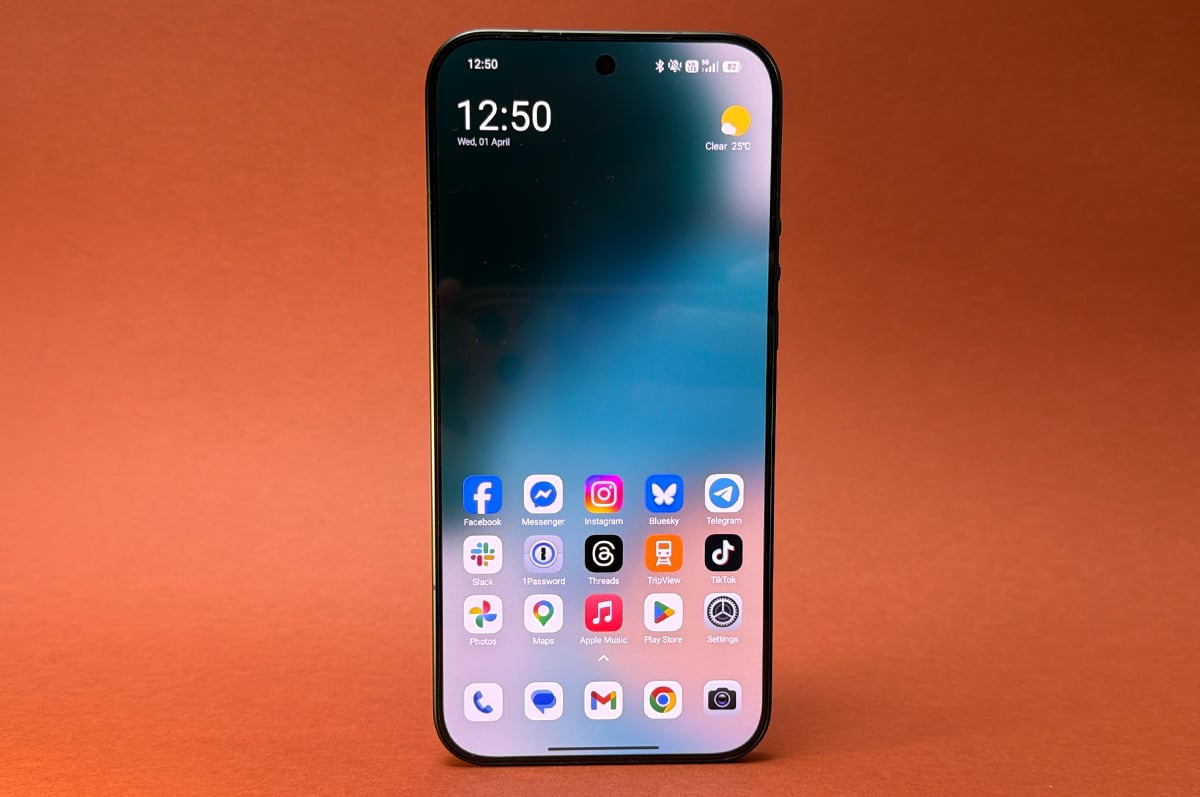
- Fantastic camera setup
- Cheaper than rivals
- Great performance
- Battery isn't as impressive as you'd expect
- Shorter software lifespan than rivals
The Xiaomi 17 Ultra is the first phone in a long time where the camera has genuinely wowed me. Sure, I’ve tested plenty of great camera phones over the years, but year-on-year photography improvements have gotten pretty gradual. Camera phones keep getting better, but it is rare to see a night and day difference, whether that’s between competitors or when compared to previous models.
That’s why the Xiaomi 17 Ultra surprised me. It does deliver a night and day difference. Both the photos below were taken in a pitch-black room, where the only ambient light came in through the window in the corner.
The first shot is from the iPhone 17 Pro, which is easily one of the best camera phones on the market:

The second is from the Xiaomi 17 Ultra:

Neither is what you’d call amazing, but where the iPhone 17 Pro’s image looks like something out of a lo-fi horror movie, the Xiaomi 17 Ultra turns a torture test into a decent shot.
Science, man
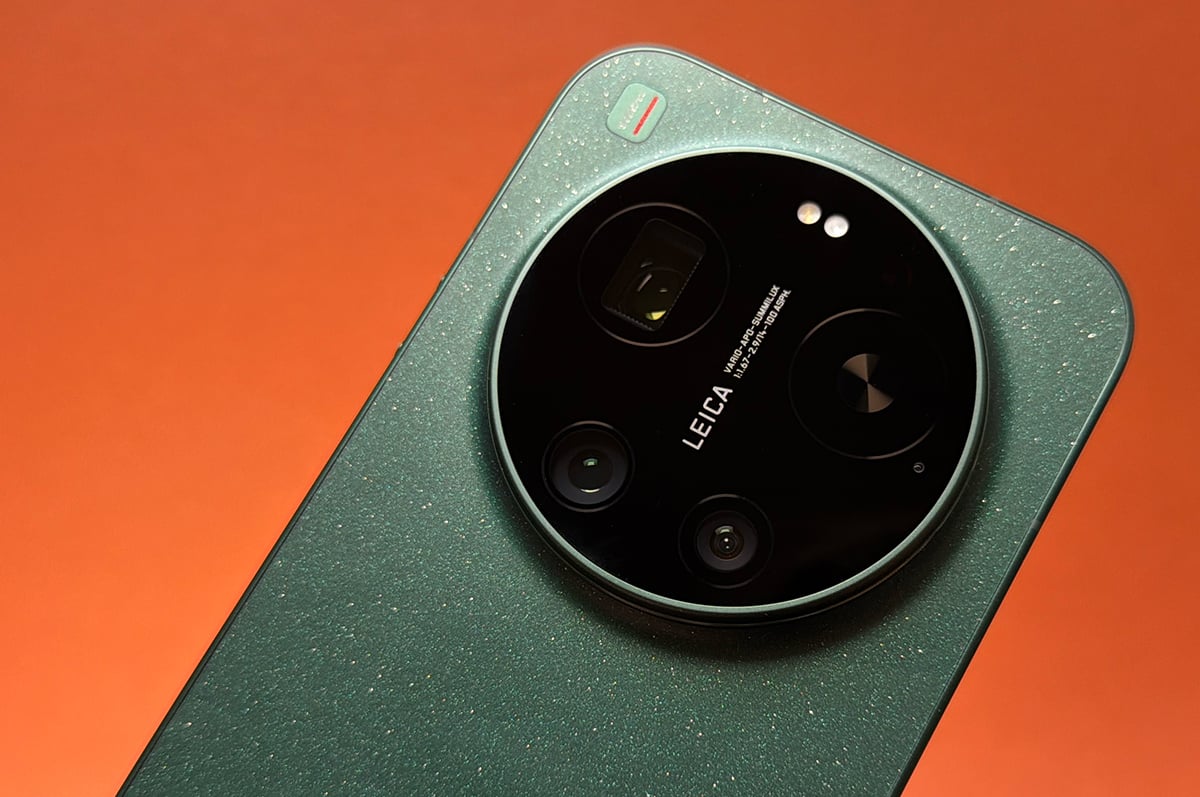
The secret to the Xiaomi 17 Ultra’s photographic prowess is a larger sensor behind the primary lens. It’s the first major phone to launch in Australia that has a 1-inch sensor. This is the type of sensor you’d normally see in a compact camera, like Sony’s ZV-1, rather than what has been traditionally used in phones. A larger sensor means the Xiaomi 17 Ultra’s primary camera can capture more light, which in turn results in better low-light performance and less noise. It’s physics.
The result of all of this is a fantastic camera phone. I struggled to take a photo I wasn’t happy with. There’s very little to complain about here.
(It is worth noting that the Xiaomi 15 Ultra also has a 1-inch sensor and was briefly available in Australia, and manufacturers like OPPO have put 1-inch sensors in their devices, but these have not launched locally.)
On top of the 1-inch sensor, the Xiaomi 17 Ultra has another neat point of difference: a variable-length optical zoom lens. Instead of having a fixed magnification, like 3x or 5x, as are common on phones, the Xiaomi 17 Ultra’s lens can zoom between 3.2x and 4.3x magnifications. This means every point in between is done “optically” rather than with software, so you’ll get a better photo as a result. The Xiaomi 17 Ultra is the first time we’ve seen this kind of lens - which, once again, is typically associated with traditional cameras - in a phone, and it’s pretty neat. More importantly, the photos you get are lovely. It’s also surprisingly useful for macro-style shots with very shallow depth of field.
The trio of camera lenses is rounded out by a solid ultra-wide offering. It isn’t as exciting as the primary lens or the zoom, but it’s still a capable camera.
Xiaomi 17 Ultra camera samples
Check out these camera samples taken on the Xiaomi 17 Ultra. Click or tap on any photo to see a larger version.














My one niggle with the Xiaomi 17 Ultra’s camera is that generative AI seems to be used to enhance images unless you choose to shoot in “Pro” mode. We’ve seen generative AI creep into mobile photography with manufacturers like OPPO and Google using it to get better results from long-range zoom, but in the case of the Xiaomi 17 Ultra, generative AI is used on images even in the standard magnification range. This isn’t the biggest issue most of the time, but if you are taking a photo of something with text involved, you might see generative AI’s trademark hallucinations, and that’s the kind of thing that could make someone think the entire picture is fake.
Admittedly, you do have to pixel peep to see these kinds of computational freakouts. Here’s a 100% crop of a photo I took where I saw the issue. If you were just looking at this zoomed out on a phone screen, it’s unlikely you’d notice.

I’m glad those who want to avoid this have the option to use Pro mode (which also strips away some other computational photography enhancements like night mode), but I wish there was an option to just turn it off, full stop. There’s a setting for disabling generative AI enhancement when zooming, but this doesn’t seem to impact standard shots.
Photography enthusiasts might be tempted by the Leica Leitzphone, a pricier variant of the Xiaomi 17 Ultra. While all the core specs are the same, you get a Leica-inspired design, which is admittedly quite nice, and a rotating camera ring that gives you a physical control for zooming. It does, however, cost $500 more than the Xiaomi 17 Ultra’s starting price.
Putting the phone in camera phone
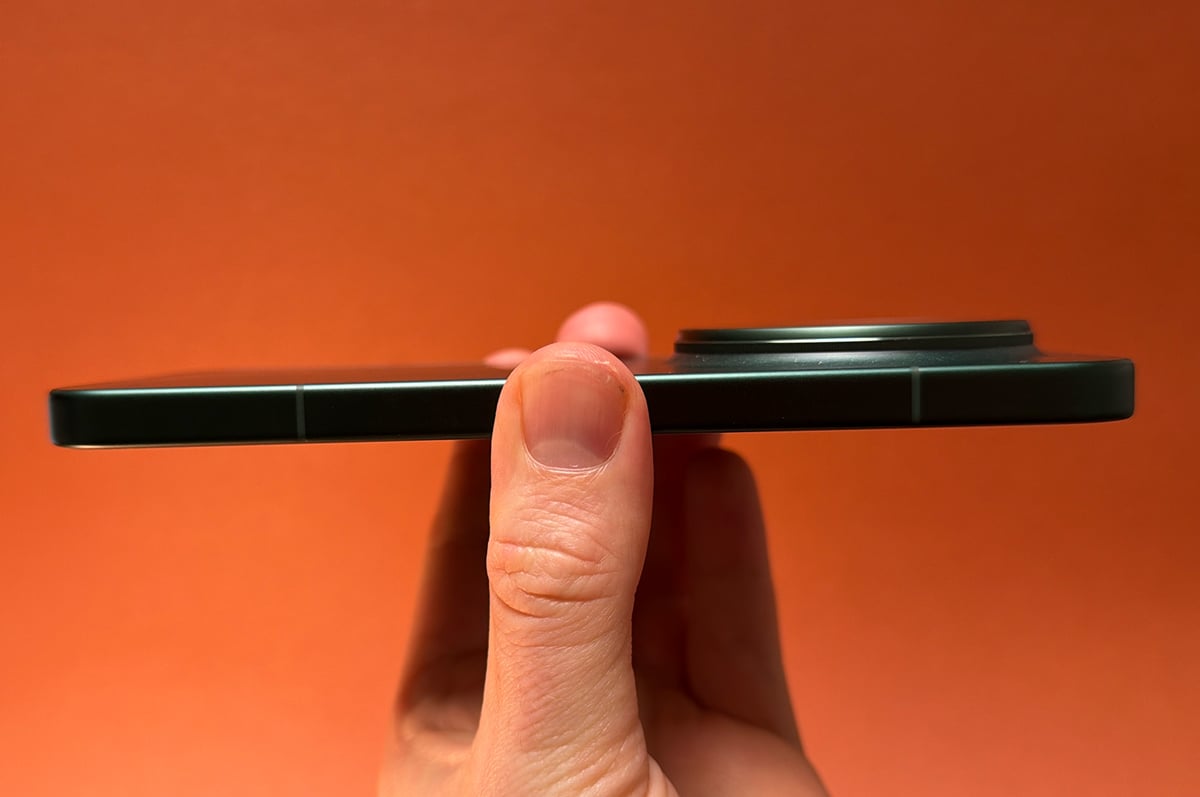
The fantastic camera setup may be the reason to consider the Xiaomi 17 Ultra, but the rest of the phone also delivers. It’s powered by a Snapdragon 8 Elite Gen 5, which is as snappy as Android phones get. You’re gonna have performance issues here. The screen is great, and the build feels premium.
You should get around five or six hours of screen time per charge, which is enough for a full day of usage. This isn’t bad, but it is a little disappointing given the massive 6,000mAh battery inside. Samsung’s Galaxy S26 Ultra manages better battery life with a smaller cell, and the Xiaomi 17 Ultra certainly doesn’t live up to the kind of longevity we’ve seen in phones like the iPhone 17 Pro Max or the OPPO Find X9 Pro.
The Xiaomi 17 Ultra is also a little out of step with the competition when it comes to software updates. Xiaomi is promising five years of operating system upgrades and six years of security updates, which is on par with OPPO. Samsung and Google promise seven and seven, however.
Otherwise, you’ve got the usual bells and whistles here. IP68 water-resistance, eSIM support, and wireless charging are all accounted for. The Xiaomi 17 Ultra’s wireless charging isn’t Qi2, however, (although it will work with Qi2 chargers), and it doesn’t have magnets for accessories.
Xiaomi 17 Ultra - Final Thoughts
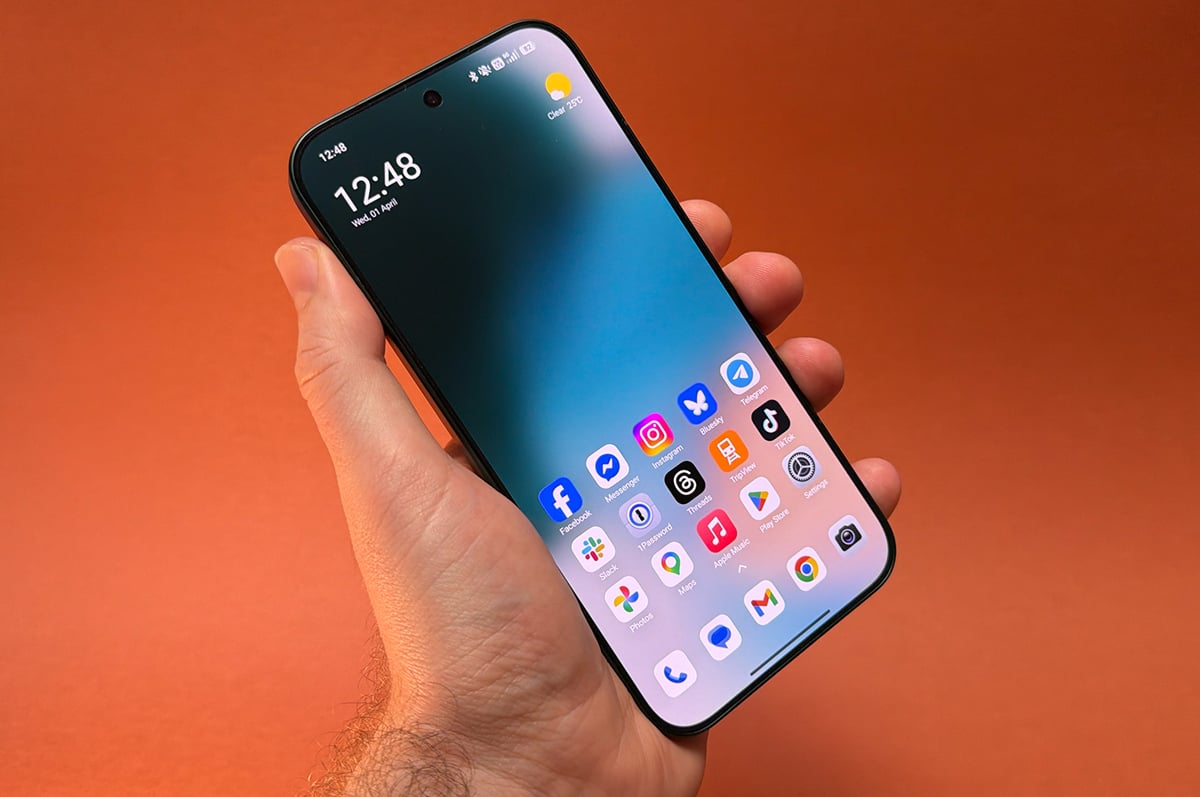
If the Xiaomi 17 Ultra were priced in line with the top end of town, it would still be worth your consideration, but it’s not. Xiaomi is heavily undercutting the competition, pricing its latest flagship at $1,799 for a 512GB model. You’ll spend a minimum of $1,999 for an iPhone 17 Pro with 256GB storage, $2,199 for a Galaxy S26 Ultra with 256GB, or $2,299 for an OPPO Find X9 Pro with 512GB. $1,799 certainly isn’t cheap, but it's a great price for a phone of this calibre.
While the Xiaomi 17 Ultra doesn’t throw any red flags, photography enthusiasts will get the most out of it. The camera setup is fantastic, and has given me some of the best photos I’ve taken on a phone. When coupled with the pricing, the Xiaomi 17 Ultra is easy to recommend.
Did you like this article? Good! Why not make us a preferred source in Google? Click below, tick the box, and WhistleOut stories will show up more often when you search for related content.
Alex Choros

Related Articles


